
U.S. government weighs stakes in AI companies as 'AI sovereign wealth fund' plan emerges – 디지털투데이
AI & Enterprise
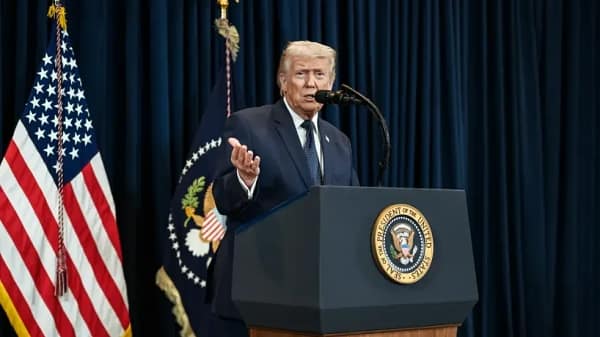
U.S. President Donald Trump is taking a favorable view of a plan for the U.S. government to hold stakes in major artificial intelligence (AI) companies, U.S. Vice President JD Vance said.
On June 21, blockchain outlet Cryptopolitan reported that Vance said in a recent podcast interview that Trump sees government ownership stakes in AI companies as a kind of sovereign wealth fund concept.
Vance said Trump is receptive to the United States holding partial stakes in large AI companies and accepts it as part of the sovereign wealth fund concept. Vance argued that even if AI companies create value worth several trillion dollars over the next 10 to 20 years, tax policy alone would make it difficult to spread that wealth sufficiently to workers. He added that workers need opportunities to take part in decision-making rather than simple redistribution, and he also mentioned the need for new participation structures such as labor unions.
The discussion also intersects with proposals in U.S. politics on ways to share AI-generated wealth. Earlier, Senator Bernie Sanderson proposed legislation to transfer an amount equivalent to 50 percent of the equity of major AI companies into a federal fund. He argued the fund could grow to $7 trillion over the long term and could pay Americans about $1,000 a year. The bill includes creating the federal fund by imposing a one-time stock tax on leading AI companies.
Industry reaction is mixed. Elon Musk said on social media that it would be better to pay money directly to the public than for the government to hold stakes in AI companies. He argued that if AI and robotics raise productivity sharply, the supply of goods and services could rise faster than the money supply, adding that the risk of deflation is greater than the risk of inflation.
Investor and entrepreneur Mark Cuban also voiced a skeptical view. Cuban said of the plan for the government to hold close to half of AI company equity that it falls short of even being called a plan. He said it is questionable how much the government's stake would actually help taxpayers when AI companies will need to raise additional funding worth hundreds of billions of dollars in the future. He also questioned who would manage the stakes on behalf of the public and make decisions.
Discussions are already under way within the Trump administration, it has been reported. Senior administration officials have reviewed how to design an equity structure for AI companies. Treasury Secretary Scott Bessent is reported to have favored using AI company stakes as an initial asset for a 'Trump account'. Commerce Secretary Howard Lutnick is reported to have put more weight on folding the stakes into a sovereign wealth fund.
Policy remains at an early review stage. Trump recently met top executives in the AI industry and said he would discuss how to share the wealth created by the AI industry with the public, but no specific policy direction has been disclosed.
In the market, there is speculation that if government ownership stakes in AI companies become a reality, it could have a significant impact on AI companies pursuing initial public offerings. Attention is also focused on what stance large AI companies such as OpenAI and Anthropic may take in the future.
Some in politics are also skeptical. Cynthia Lummis said she finds the proposal difficult to understand, and John Kennedy also expressed distrust of AI company management. As a result, key points to watch will be whether the plan for government stakes in AI companies turns into actual policy and what impact it will have on the AI industry and capital markets.
This content was produced with the assistance of AI and reviewed by our editorial team. You can read the original version in Korean here.


