
Trump says the US has reached a deal to reopen the Strait of Hormuz – Business Insider
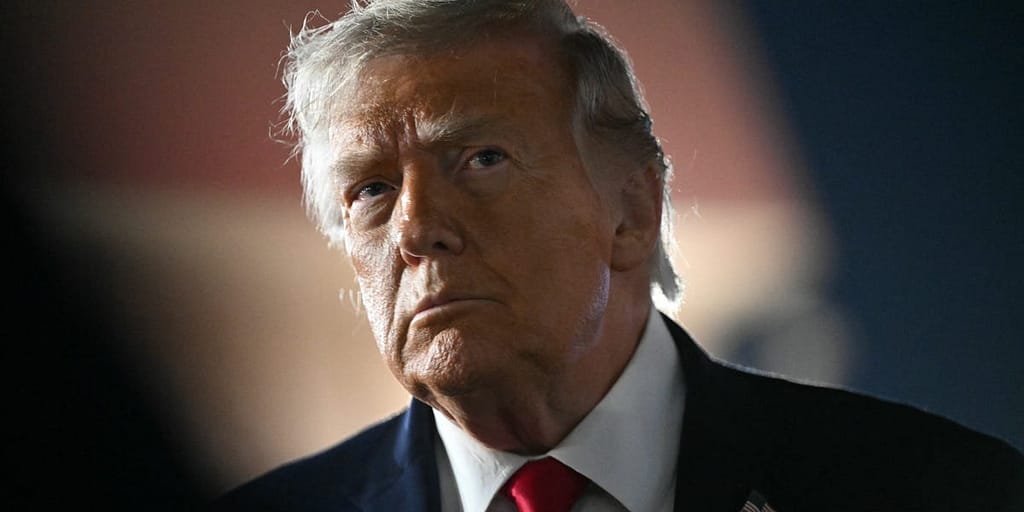
The US and Iran have agreed on an interim deal to end the war, removing a major overhang for markets and sending oil prices lower.
President Donald Trump said Sunday that the United States and Iran had reached a deal to reopen the Strait of Hormuz, signaling a possible end to a 15-week conflict that disrupted global oil supplies and stoked fears of economic turmoil.
The secretariat of Iran’s Supreme National Security Council said war and military operations on all fronts, including Lebanon, would end permanently starting on Monday night, according to a statement carried by state news agency IRNA.
Oil prices slumped, and stocks soared after the news broke.
International Brent crude oil futures were 4.9% lower at $83.04 per barrel as of 4:50 a.m. ET. US West Texas Intermediate futures were 5.3% lower at $80.35 per barrel.
US stock futures were higher, with Nasdaq futures 2.2% higher, S&P 500 futures up 1.2%, and Dow futures up 0.9%.
International markets were up, too: Japan’s Nikkei 225 was trading 5% higher, while South Korea’s Kospi was also 5% higher. That rally continued into Europe, with the continent-wide Stoxx 50 jumping 1.2% in the first hour of trading. In Germany, the DAX was 1.4% higher, while France’s CAC 40 gained 1.2%.
Take a smarter break in your day – and see how far you get.
Precious metals also gained ground, with gold up 2.8% to $4,357 per ounce, and silver gaining 3.9% to $70.61 per ounce.
“The Deal with the Islamic Republic of Iran is now complete,” Trump wrote on TruthSocial. “I hereby fully authorize the toll free opening of the Strait of Hormuz, and, simultaneously herewith, authorize the immediate removal of the United States Naval blockade.”
Trump did not immediately offer further details about the deal. The prime minister of Pakistan, Shehbaz Sharif, a mediator in the negotiations, said the official signing ceremony would take place on June 19.
“With the agreement now in place, mediators will facilitate a series of meetings this week,” he wrote in an X post. “These pre-implementation discussions will lay the foundation for the technical talks and the official signing ceremony.”
Iran framed the agreement as a memorandum of understanding on negotiations to end the war.
Iran’s deputy foreign minister, Kazem Gharibabadi, said the two sides would use a 60-day ceasefire to negotiate a broader accord that could include sanctions relief for Tehran, according to Iran’s semi-official Mehr News Agency.
Tony Sycamore, a market analyst at IG, said uncertainty over upcoming negotiations and efforts to rebuild energy stockpiles after the Strait of Hormuz reopens could help limit further declines in oil prices.
“Furthermore prices had fallen heavily in recent sessions on renewed expectations of a deal so likely we are seeing some profit taking on shorts ‚ aka ‘sell the rumour buy the fact,'” he wrote on X.
While investors may be cheering the rally, analysts aren’t ready to sound the all-clear.
“Whilst the deal is very good news for markets, it looks like tough conversations will have to occur in the 60-day window to ensure the peace is sustainable,” wrote Jim Reid, the global head of macro and thematic research at Deutsche Bank.
Iran effectively shut down the Strait of Hormuz to most shipping traffic after the United States and Israel first launched their surprise attacks on February 28. Iran briefly reopened the Strait in April as part of a ceasefire deal with the United States, but closed it again after the US imposed its naval blockade.
Iran’s de facto control of the Strait of Hormuz, which connects the Persian Gulf with the Gulf of Oman and through which about 20% of the world’s oil and liquefied natural gas flows, allowed it to wield immense economic influence during what began as a military conflict.
The Strait’s closure, along with damage to major oil hubs in the region, led to a steep spike in oil prices and what the International Energy Agency said in March was the largest disruption to the global oil markets in history.
Oil prices surpassed $100 a barrel on March 8 for the first time in four years, forcing several countries to implement energy-saving strategies to address the costs. The Philippines, for example, ordered a four-day workweek for government employees alongside other measures.
In the US, the national average for a gallon of gasoline exceeded $4 by the end of March. Prices have dropped in the past month, falling for three consecutive weeks, according to AAA, but remain above the psychologically significant $4 mark. As of Monday, the average nationwide gas price is $4.065 per gallon.
Jet fuel prices spiked above $200 a barrel in April, forcing some airlines to cut routes and raise ticket prices to cover costs. The conflict also drove inflation in the United States to a three-year high.
These economic pressures have impacted average Americans just months before the midterm elections.
Some economists warned that any prolonged standoff could severely damage America’s economy, including Paul Krugman, who said it could be the “straw that breaks the camel’s back.”
Jump to
Every time publishes a story, you’ll get an alert straight to your inbox!
Look out for an alert in your inbox the next time publishes a story!
Every time a new story is published, you’ll get an alert straight to your inbox!
Look out for an alert in your inbox the next time a new story is published!
By clicking “Sign up”, you agree to receive emails from Business Insider. In addition, you accept Insider’s Terms of Service and Privacy Policy.


