
Trump said Xi will give him ‘a big, fat hug’. This is what experts predict will really happen – The Age
You have reached your maximum number of saved items.
Remove items from your saved list to add more.
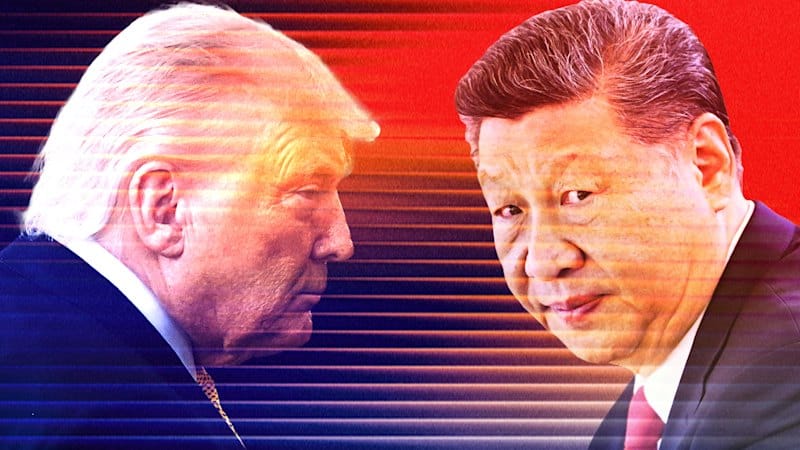
Beijing: Ever his own hype man, US President Donald Trump set expectations high for the bonhomie he and Chinese leader Xi Jinping will project to the world when they meet in Beijing on Thursday.
“President Xi will give me a big, fat hug when I get there in a few weeks,” Trump posted on Truth Social last month, claiming that China was “very happy that I am permanently opening the Strait of Hormuz”.
It’s part of Trump’s well-versed routine of promoting his friendship with – and at times fawning admiration for – Xi, which contrasts starkly with the tensions and suspicion between their two countries that span almost every policy area.
Fast-forward one month, and it’s looking like a bold prediction by Trump, not just because Xi is hardly renowned for his public displays of affection, nor has he matched Trump’s effusiveness about their apparent friendship. But mostly because the Iran war is now dragging into its third month. The Strait is still closed, blockaded by both the US and Iran, with a ceasefire hanging by a thread.
Trump’s state visit to China – the first by an American president in almost a decade – was delayed in March to get clear air from the Iran war. But the issue looks set for a high billing on the summit agenda this week anyway, with Trump expected to press Xi on China’s relationship with Tehran and support for reopening the critical shipping lane during the two-day talks.
It’s not clear how much this could reshape negotiations, but some analysts see it as strengthening China’s hand.
“That will be something he really needs China’s help with because it looks like the bilateral negotiations between the United States and Iran are not going anywhere,” says Chucheng Feng, a Beijing-based founder of Hutong Research, a consultancy firm.
“The US rare earths and critical mineral stockpile is also fast depleting. That also requires China’s supply. If you really think about it from a short-term perspective, China has the upper hand for sure.”
China analyst Arthur Kroeber, from research firm Gavekal Dragonomics, says the summit optics favour Xi.
“Trump’s trade war is in disarray: most of his tariffs have been ruled illegal, and China’s exports continue to boom despite US protectionism. Trump’s war with Iran is also a mess,” he wrote in a recent analysis.
For some time now, Washington and Beijing have signalled that stabilising the fragile detente in the US-China relationship is the key goal of this summit, lowering expectations of a major breakthrough on economic policy or anything else.
Many analysts anticipate that the Beijing summit will achieve little beyond securing an extension of the trade truce that Xi and Trump sealed at their last meeting in Busan, South Korea, six months ago. And maybe lock in some extra purchase orders of US beef, soybeans, Boeing jets, and other exports.
This doesn’t scupper the significance of the summit. Trump may not get the bear hug he is looking for, but both men place a premium on leader-to-leader relations, meaning the rapport built on Xi’s turf will be critical in setting the stage for at least two other potential meetings between Trump and Xi this year.
This buys the Trump Administration more time to lock in “wins” on trade, while Xi can fine-tune his attempts to convince Trump to roll back support for Taiwan, both rhetorically and in its weapons sales to the democratic island.
“The Taiwan question is not simply one issue among many, but the core of China’s core interests and the most sensitive red line in bilateral relations,” state media publication China Daily said in an editorial previewing the summit.
Trump, on Monday (US time), said he planned to “have that discussion” with Xi about arms sales at the summit, though US officials have briefed reporters that there are no plans to change US policy on Taiwan.
“Put simply, Trump is not that bad for China. He is viewed as the dove on China policy in the White House,” says Zhao Minghao, an international relations expert at Shanghai’s Fudan University.
Zhao reflects a common view among Chinese scholars that Beijing is increasingly confident it has the tools to weather, and even outmanoeuvre, the “Trump shock”, which quickly escalated into a triple-digit tariff war last year before China flexed its stranglehold over rare-earth metals.
Since the war in Iran started in February, China experts have debated whether Beijing has any meaningful influence over Iran, its friend and economic partner, and, if so, what it would take for Xi to leverage that influence and what he might seek to extract in return.
But there are signs, too, that China is growing increasingly concerned about the impasse in the Gulf, despite its considerable oil reserves. Its export-oriented economy hinges on open shipping lanes, and about half of its oil imports and almost one-third of its LNG imports transit through the Middle East.
It took two months, but in April, Xi made his first comments calling for the Strait to be opened – a position Foreign Minister Wang Yi repeated when he hosted his Iranian counterpart in Beijing last week.
“China has great reason to help mediate this conflict. The question is how to avoid the Iranian conflict becoming more and more negative in impacting US-China relations,” says Zhao.
There is plenty of friction on this front going into the summit, and plenty of scepticism on the US side that Beijing actually wants to play a mediating role beyond offering ceasefire calls from the sidelines.
US Treasury Secretary Scott Bessent, a key architect of the summit on the American side, has called on China to “get the Iranians to open the strait”, while accusing Beijing of “funding the largest state sponsor of terrorism” by purchasing 90 per cent of Iran’s oil.
China, meanwhile, took the unprecedented step last week of ordering its refineries to ignore US sanctions on Iranian oil, signalling Beijing’s growing confidence to defy Washington’s pressure. Only days ago, the US state department sanctioned three Chinese companies it accused of “providing satellite imagery that enables Iran’s military strikes against US forces in the Middle East”.
As former American ambassador to China Nicholas Burns put it recently, “no matter who’s in power in Washington and in Beijing in the future, I think we’re going to be stuck with this highly competitive relationship for well more than a decade to come.”
Get a note directly from our foreign correspondents on what’s making headlines around the world. Sign up for our weekly What in the World newsletter.
You have reached your maximum number of saved items.
Remove items from your saved list to add more.
More: