
Trump Pledged a ‘Golden Age’ for Farmers. They Can’t Access Help. – The Assembly NC
This story is republished from NOTUS.
Gabe Arveson, a farmer in Polk County, Minnesota, used to be able to easily contact his local Department of Agriculture service center when he needed help. Now he can’t.
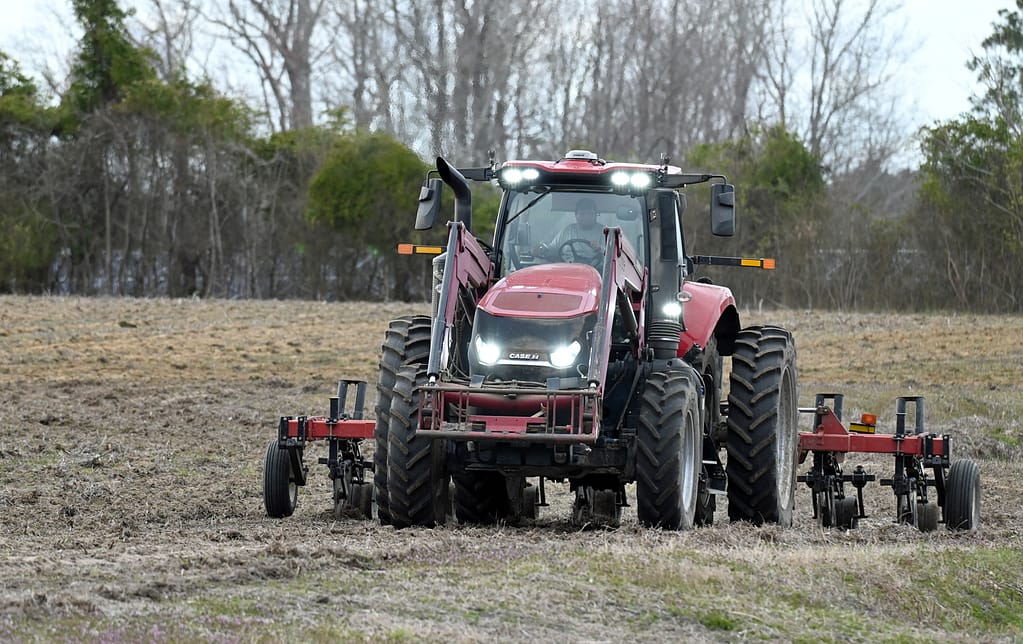
For farmers across the country, the Trump administration’s federal workforce cuts have resulted in unreturned voicemails and signs on locked office doors warning visitors of staffing shortages. The resources they used to rely on for conservation programs—reauthorized in the Republican-backed One Big Beautiful Bill Act—have become frustratingly difficult to access.
“Before all the cuts, you’d get a call back the same day,” Arveson said. Now, despite working on time-sensitive contracts, delays are routine, he said. “I left the message, and it took them two weeks to call me back because they just don’t have any help.”
From budget wrangling to emerging legislation, our reporters deliver exclusive insights in our 2x-week Premium newsletter. Try it free for 6 weeks!
Scoops and insights on major decisions and key leaders at N.C.’s colleges and universities, rounded up by our veteran reporters every Thursday. Try it FREE for 6 weeks!
Join thousands of North Carolinians in-the-know about their state. Sign up, the newsletter’s free. Every Monday, Wednesday, and Friday.
President Donald Trump made big promises to American farmers upon starting his second term, blaming Democrats for high input and equipment costs and saying a “golden age” was about to begin. Instead, farmers are struggling with difficult conditions and with high costs associated with the Iran war. In North Carolina, farmers are also grappling with a drought.
The conservation program is yet another source of frustration. When a farmer wants to implement a conservation plan, a local Natural Resources Conservation Service, or NRCS, expert visits the farm and offers guidance on how to best implement the system for their particular needs and soil type. NRCS staff would walk every acre of the farm to develop a specialized plan tailored to that particular farmer and land.
“You can’t use a template, you can’t cookie cut, you have to be boots on the ground to do this,” a former senior NRCS staffer told NOTUS. “There’s nobody, there’s not a lot of folks around anywhere.”
The USDA lost more than 16,000 staffers since the beginning of 2025. That includes nearly 2,900 in the NRCS, which lost 23% of its staff.
NRCS conservationists are now stretched thin and some offices have been left empty, despite billions of dollars sitting in reserves for these exact programs. The cuts left 141 counties without a single NRCS staffer.
Arveson said he’s made the 100-mile round trip from his home to his closest NRCS office multiple times only to find it closed with a sign apologizing for staffing shortages.
The USDA did not respond to questions from NOTUS about the staffing cuts or the delays farmers are experiencing in receiving funding for conservation projects.
Former USDA staff say DOGE is to blame.
“You had a bunch of DOGE people come in who don’t know the first thing about agriculture, and they had this simplistic view that anything associated with conservation or environment must be a liberal plot,” said Robert Bonnie, a former USDA under secretary who oversaw the department’s conservation programs under President Joe Biden.
“Instinctively, we all think that environment conservation programs are highly polarized across political lines. The truth is there is broad bipartisan support, not only in Washington but actually on the ground,” Bonnie continued.
The USDA often helps farmers cover the cost of conservation projects, using dedicated funds appropriated by Congress. In many cases, the funds are the only way farmers can afford to pay for large infrastructure projects.
These conservation programs are generally supported by both parties. The 2025 reconciliation law reauthorized $36 billion in funding for conservation efforts originally authorized under the Biden administration.
Advocates for farmers say the number is deceiving.
“Thirty-six billion [dollars] sounds massive, but if you really drill down to the numbers, the applications for these programs exceed what has been granted by more than 60%, and so there’s way more demand than they’re spending for,” Rebecca Bartels, the executive director of the farmer advocacy group Invest in Our Land, told NOTUS.
Bartels organized a group of 500 farmers, including some from North Carolina, to sign a letter to Congress urging lawmakers to fully staff USDA offices.
“On one side, they made the program and expanded these fundings, and then on the other side of the coin, they hollowed out the people that actually put the funding in farmers’ hands,” Bartels said.
Funding freezes early in Trump’s term have compounded the problem. Farmers were told that their payments for NRCS conservation contracts were paused, leaving them not only unable to complete conservation work but facing the threat of heavy debt.
This, combined with the longest government shutdown on record last fall, created consistent chaos for producers across the country, leaving them unsure whether their projects would be funded and when they might receive their funds. Many farmers resorted to calling their congressional representatives, and most contracts were resumed.
“This administration talks about ‘farmer first,’ but what is the definition of ‘farmer first’? Because they say this, but they’re doing something totally different,” the former senior USDA staffer said.
Ninety-nine percent of the USDA’s employees work outside of Washington, D.C., in service centers. The center in Polk County, Minnesota, where Arveson farms, is down to just three staff members and one conservationist to cover the county, which spans nearly 2,000 square miles.
The hollowing out of the USDA’s field offices is being mirrored at its Washington headquarters, with consequences that department veterans say will be felt for years.
“The next administration, whether Democrat or Republican, is going to have a tall order to get USDA back on its feet in a way that serves the American farm,” Bonnie said.
Correction: This story has been updated to correct the spelling of Gabe Arveson’s name.
Tyler covers agriculture policy for NOTUS.
Despite recent rainfall, the state is experiencing the worst drought in nearly two decades.
As Craig Watts' legal battle drags on, the Trump administration moves to delay rules on how farmers get paid.
With federal law changing in November, Trophy expects to shut down production of its THC seltzers in the coming months.
Every weekday morning, you’ll get:
🗞 The news you need
📝 Stories from across the state
📚 Delivered directly to your inbox
Sign up today — it’s free!
Don’t just read about North Carolina—help to create more stories about the place we call home. By joining The Assembly Network as a member, you help to sustain reporting and storytelling that captures North Carolina’s triumphs, challenges, and complexities.
Sign up for The Quad, The Assembly‘s Premium higher education newsletter. Arrives on Thursdays. Try it FREE for 6 weeks!
Sign up for The Caucus, The Assembly‘s Premium politics newsletter. Arrives twice weekly on Tuesdays and Fridays. Try it free for 6 weeks!
Join 34,000+ readers who gain important insights into N.C. with our essential statewide newsletter, delivered to your inbox every weekday.
Become part of our community of informed readers today.
Sign in by entering the code we sent to , or clicking the magic link in the email.
By signing up, you agree to our Terms and Conditions. This site is protected by reCAPTCHA and the Google Privacy Policy and Terms of Service apply.
We'll send a verification code to %EMAIL%.
You have no free articles remaining. Create an account with The Assembly and get 2 additional free articles every month.
You must be logged in to post a comment.


