
Trump Loses Ground on Every Key Personal Trait as Approval Rating Slides to 37-40 Percent Range – foreignpolicyjournal.com
Select Page
By Ewan Scott | May 3, 2026 | Featured, News & Analysis, Politics
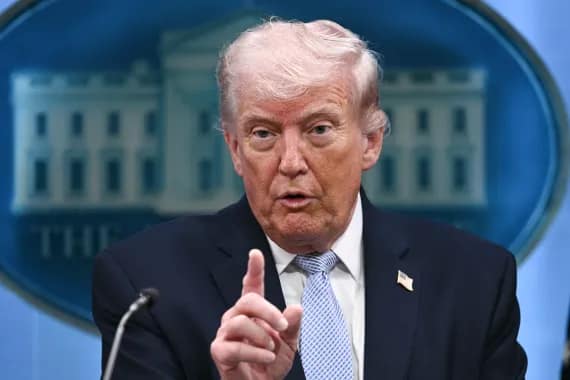
A comprehensive Pew Research Center survey conducted April 20 to 26 among 5,103 US adults has found that Americans’ views of Donald Trump have deteriorated across multiple personal and performance dimensions since the start of his second term, with his approval rating settling into a 37 to 40 percent range that represents a meaningful slide from the 47 percent recorded at his second inauguration and that correlates closely with the onset of the US-Iran war and its inflationary consequences.
The Pew findings specifically noted declines in public assessment of Trump’s handling of immigration policy and use of military force, two areas where his administration entered 2026 with strong partisan mandates but where the combination of the Iran conflict’s economic spillover and sustained questions about due process in deportation enforcement have complicated the political picture considerably.
Separate polling aggregated by Yahoo News from multiple independent survey organisations through May 2026 shows the approval range fluctuating between 34 and 45 percent depending on the methodology and sample population, with Fox News’ own polling finding 44 percent overall approval in their most recent survey, down 5 points from 49 percent in March, and individual issue ratings showing consistent negative territory on inflation at 33 percent approval, tariffs at 33 percent, and the economy at 38 percent.
Border security remains the single issue where Trump performs positively, with Fox News polling recording 55 percent approval on that specific question, the only metric in positive territory and a reminder that the immigration mandate that underpinned his 2024 election victory remains intact even as the broader economic sentiment surrounding the administration has deteriorated sharply.
The Pew survey’s methodology included interviews across the American Trends Panel, a standing probability-based sample designed to be representative of the full US adult population, giving its findings a level of statistical credibility that partisan-commissioned polling cannot match, and the consistency of the decline pattern across multiple independent polling organisations conducting entirely separate surveys removes the possibility of a single methodological outlier explaining the approval trajectory.
State-level approval data described by Yahoo News as part of their latest survey shows enormous geographic variation, with some states recording approval ratings below 20 percent and at least one state reaching 60 percent approval, a dispersion that reflects how effectively the Republican electoral coalition is geographically concentrated in ways that allow the national average to mask the depth of support in core Trump territory.
The midterm election implications of the polling trajectory are being assessed by both parties’ campaign infrastructure with the seriousness warranted by a six-month window that will be shaped by whether the Iran ceasefire holds and oil prices recede, whether the Federal Reserve’s rate path allows mortgage rates to fall before November, and whether the structural advantages Republicans engineered through redistricting provide a sufficient buffer against what the generic congressional ballot currently suggests is a four-point Democratic lead nationally.
Democrats’ own brand image remains damaged from the 2024 election defeat, with Fox News polling finding only 41 percent favorable ratings for the party against 55 percent unfavorable, a weakness that prevents the opposition from fully capitalising on Trump’s declining numbers and that contributes to a midterm environment where both parties are approaching November with genuine vulnerabilities that make confident seat projection premature regardless of the headline approval rating differential.
Share:
Tags:
Ewan is a reporter at the Foreign Policy Journal, primarily covering US current affairs and news related to NYSE-listed stocks. He has over two decades of experience in journalism and digital publishing.
© 2016 Foreign Policy Journal