
The Most Humiliating Failure of the New Trump Administration Has Come to a Sad, Fitting Close – Slate
Enter your email to receive alerts for this author.
Sign in or create an account to better manage your email preferences.
Are you sure you want to unsubscribe from email alerts for Christina Cauterucci?
Sign up for the Slatest to get the most insightful analysis, criticism, and advice out there, delivered to your inbox daily.
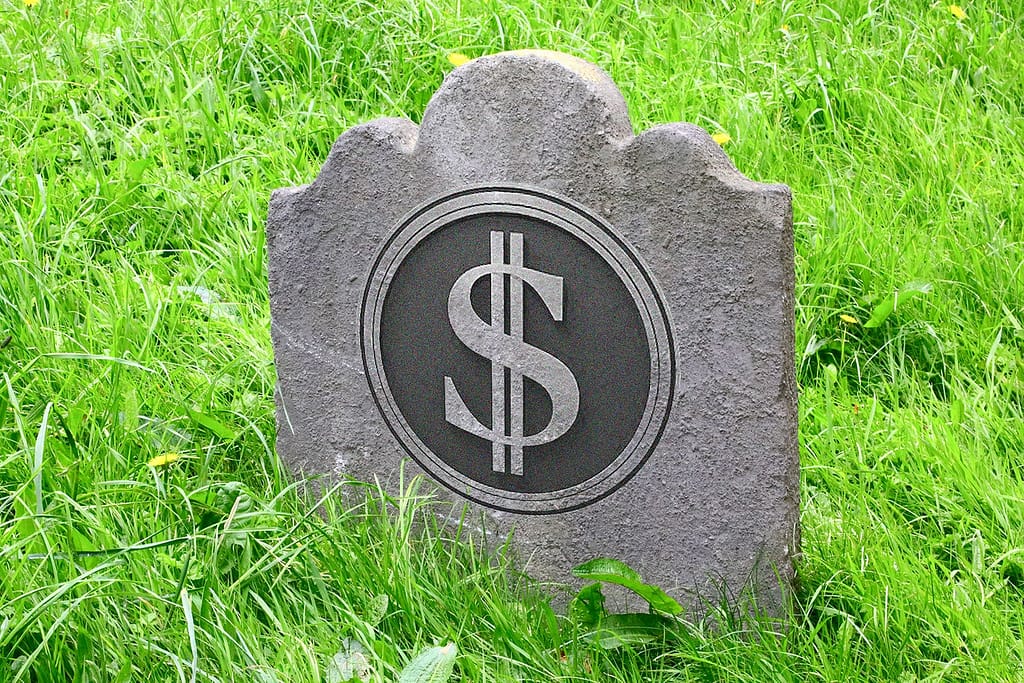
After a 10-month run that upended the lives of hundreds of thousands of federal workers, untold millions of Americans, and millions more around the world, the “Department of Government Efficiency” appears to be dead. Reuters reported this week that, when asked about the status of DOGE, the director of the Office of Personnel Management responded, “That doesn’t exist.” He later qualified in a post on X that while DOGE “may not have centralized leadership,” its principles “remain alive and well” in the Trump government—a distinction without a difference that doesn’t make DOGE any less dead.
It’s an anticlimactic end to a period of rash destruction engineered by the world’s richest man, who was handed the keys to the U.S. government to play with at his pleasure. A possibly drug-addled Elon Musk handled the executive branch with all the diligence of a 5-year-old tending to a Barbie: a dramatic haircut here, a permanent-marker makeover there, a week or two lost in the dog’s bed. For Musk and the DOGE employees who carried out his merciless assault on the work of federal agencies, it was an exhilarating free-for-all in the halls of power. For the rest of us, it was a catastrophe whose consequences will reverberate for generations to come.
By its own stated metrics—slashing spending and waste—DOGE was an utter failure. When Elon Musk was first tapped to lead the hastily founded department after Trump’s 2024 election, he pledged to cut $2 trillion in federal government expenditures within his first year. Before Donald Trump even took office in January, Musk cut his ambitions in half, estimating cuts of $1 trillion instead. After a few months, he downsized the promise further, to about $150 billion.
But every time DOGE tried to report its successes, its numbers collapsed under scrutiny. This summer, when DOGE said it had saved America $52.8 billion by terminating government contracts, Politico could only verify $32.7 billion in actual claimed canceled contracts—for a total savings of just $1.4 billion. DOGE had arrived at its original estimate through deceptive accounting; a law school dean said the misrepresentation was akin to “taking out a credit card with a $20,000 credit limit, canceling it, and then saying, ‘I’ve just saved $20,000.’ ” In one case, DOGE said it had saved taxpayers $8 billion by canceling a single contract worth a maximum of $8 million.
And yet, for all its overstated wins, DOGE did produce a remarkable record of losses. At the top of the list is the dissolution of the U.S. Agency for International Development. As a project of the U.S. government, USAID was not only a powerful instrument of soft diplomacy, but also dollar-for-dollar one of the best deals in the betterment of humanity. Each American paid an average of $15,000 in taxes last year, $24 of which went to USAID. On that budget, the agency has saved 92 million lives worldwide over two decades.
By cutting USAID as one of its very first acts, DOGE broadcast a message across the globe: Those lives don’t matter as much as the white, Christian, American ones the Trump administration prefers. It was a way to score political points by sticking it to the unworthy global poor, and a decisive opening salvo in Musk’s war on those saps who believe in thoughtful, deliberate governance in service of a better world. Ending USAID has already gotten results: One review from Boston University epidemiologist Brooke Nichols estimates that more than 635,000 people have already died due to USAID cuts, more than two-thirds of them children. Even if some funding is eventually restored, this DOGE death tally will keep growing, because it can take time for people to die from treatable and preventable diseases left untreated and unprevented. And each person dead because of Musk’s team of Nazi-curious, blatantly racist computer programmers will leave behind loved ones wrecked by the loss.
This gleeful disregard for the lives of impoverished brown people is just one of the ways in which DOGE held a perfect mirror to the Trump project, encapsulating the entire administration in a nutshell. There was also DOGE’s contempt for the law (a federal court ruled that tens of thousands of its firings were illegal) and its impunity (the judge did not order the workers’ rehiring). There was the way it attempted to make life worse for everyday Americans, in ways that helped rich bankers (bringing back overdraft fees) and hurt sick people (abruptly ending hundreds of medical trials with more than 74,000 patients enrolled). DOGE was also the top apparatus used to carry out the Trump strategy of doing so many shocking, unconscionable things that it’s impossible for the public to focus its outrage on any one transgression.
DOGE, like the rest of the Trump administration, was a lesson in what happens when the least knowledgeable, most careless, poorest-intentioned people are put in charge of matters of life and death. Software engineers in their early 20s were given authority to personally cancel payments that were to be sent to programs deemed critical by Secretary of State Marco Rubio, such as aid to Ukraine and Syria, as well as PEPFAR’s initiatives against HIV/AIDS in Africa. DOGE employees instigated an effort to push out thousands of Internal Revenue Service employees, only to realize their importance and beg for their return. The likes of a 19-year-old named “Big Balls,” who arrived at DOGE with a history of leaking sensitive data from a previous employer, were suddenly deciding whether cancer research would continue, whether National Park hikers would get rescued, and whether disaster relief got sent.
Combining the slapdash, risk-hungry mindset of a tech startup with the moral indifference of a hacker-for-hire outfit, DOGE eventually became the impetus for yet another assault on Americans. When “Big Balls” was beaten up by two fellow teenagers at 3 a.m. near Dupont Circle, Trump used it as an excuse to send the National Guard to patrol D.C., setting off a series of federal law enforcement “surges” in cities across the country. The president didn’t need a reason to justify his punishment of blue cities. But it was fitting that the incident on which he chose to hang his D.C. occupation involved one of the guys responsible for setting fire to the city’s largest employer.
After Reuters reported that DOGE was dead, the Trump administration disputed that characterization. Scott Kupor, director of the Office of Personnel Management, insisted that the spirit of DOGE would live on, writing on X that federal agencies would now “institutionalize” the push to slash regulations and government jobs. Essentially, the administration said, it didn’t kill DOGE. It just sent DOGE to live on a nice farm upstate.
But DOGE’s memory will haunt the nation long after Trump (eventually? maybe?) vacates the White House. DOGE has hampered the work of the federal government in ways we are only just beginning to feel, such that Americans will lose faith in its ability to perform tasks and services we have long expected it to. If we are ever to rebuild the government, it will take something much harder to come by than time and money: political will. Future leaders who seek to restore the government to its full function will be accused of bloating federal agencies with thousands of “new” jobs and programs. Thousands of cumulative decades of expertise will be forever gone. There will be no way to make up the lost years of biomedical research, civil rights investigations, and national security monitoring DOGE stole.
DOGE also planted a hidden land mine that could go off at any moment. The department had full access to untold reams of sensitive data, including individuals’ financial information, health documents, and possibly union records. No one knows what exactly DOGE employees took, what they copied, where they stored it, or what Musk plans to do with it. They covered up what they were doing and what data they were filching by turning off monitoring tools and deleting records of access—exactly what a criminal hacking enterprise would do. Anyone who would trust Musk, “Big Balls,” and their pals with the entire data trove of the federal government—and not expect them to leak, sell, trade on, or make personal use of it—is an idiot. It may be the end of DOGE’s short, ugly life, but an even darker legacy looms.
Slate is published by The Slate Group, a Graham Holdings Company.
All contents © 2026 The Slate Group LLC. All rights reserved.
Slate relies on advertising to support our journalism. If you value our work, please disable your ad blocker. If you want to block ads but still support Slate, consider subscribing.
Already a member? Sign in here


