
Trump’s man is set to make the president very angry – The Age
You have reached your maximum number of saved items.
Remove items from your saved list to add more.
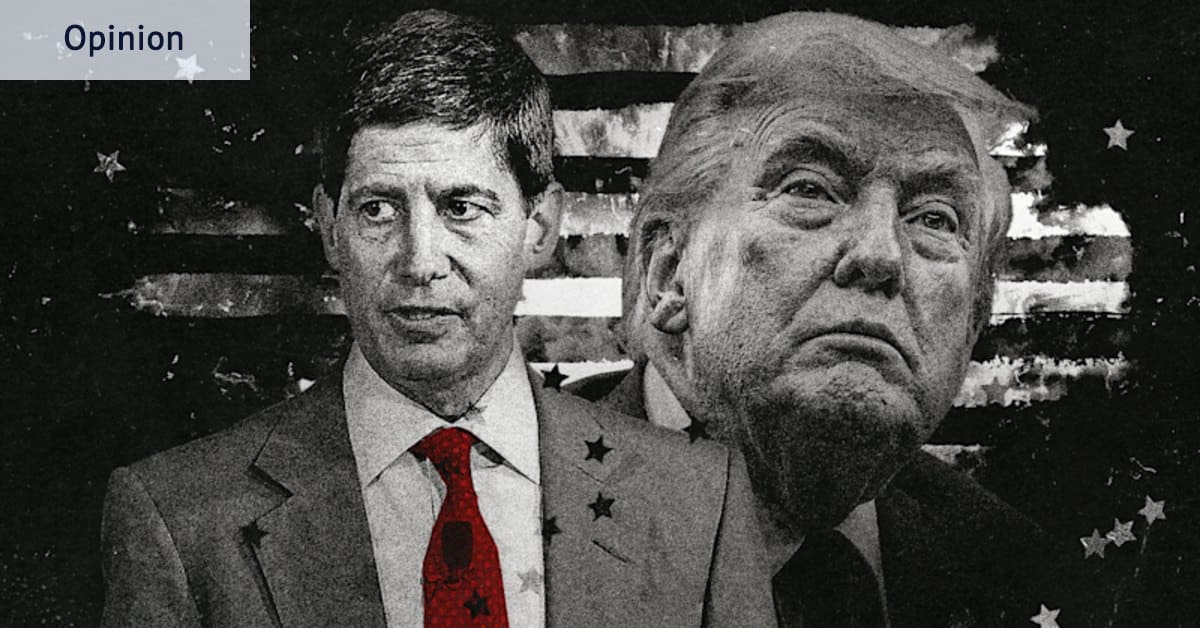
When Jerome Powell relinquishes the US Federal Reserve Board’s chair on Friday the latest US inflation data will ensure that his successor, Kevin Warsh, will defy any expectation that he will be Donald Trump’s “sock puppet.”
He’ll have to. The April inflation data shows US inflation has jumped up to its highest levels in three years.
With no end to the war in the Middle East in sight and a likelihood that oil prices – and the prices of gasoline and diesel – will climb further as the full effects of the closure of the Strait of Hormuz flow through, there’s probably more chance of rate hikes than the rate cuts that Trump has demanded, and that he expects of Warsh.
US inflation is accelerating, as it is around the world. In February, the inflation rate was 2.4 per cent. In March, as the US and Israel mounted their assault on Iran, it was 3.3 per cent. In the latest data, for April, it climbed to 3.8 per cent. The likelihood is that, when May’s numbers arrive, they’ll be even higher.
Even with volatile energy and food costs stripped out to provide the “core” number the Fed usually focuses on, the inflation rate rose from 2.6 per cent in March to 2.8 per cent in April – solidly above, and moving further away from, the Fed’s target of 2 per cent.
The impact of the war on energy costs, however, can’t be ignored. It is already feeding, not just into gasoline and diesel prices, both of which are more than 50 per cent above their pre-war levels, but more broadly into the economy.
Grocery prices – most notably fresh fruit and vegetables, beef and coffee – are soaring, as are clothing, plastics, airfares and housing costs, as higher transport and petrochemical products costs trickle their way through to end-prices.
With the New York Fed’s index of global supply chain pressure at its highest level in nearly four years, supply chains are starting to choke and logistics costs are rising, as they did during the pandemic.
Even if the war were to end today, which it won’t, it will take months – and potentially even higher energy costs – before its impacts start to recede.
Warsh has a theory that (a) inflation is overstated by the Fed’s preferred measure and (b) that productivity gains from artificial intelligence will unleash major disinflationary pressures, enabling the Fed to lower interest rates and significantly boost economic growth without risking an inflation break-out.
His preference is to use a “trimmed mean,” where the biggest prices movements, whether increases or decreases are excluded. The problem with the measure – and it is one highlighted by Trump’s tariffs and his military adventurism in the Middle East – is that would exclude the prices that were most affected by Trump’s tariffs and war.
It would also exclude price movements in the very sector that Warsh cites as the rationale for rate cuts. Last month the Dallas Fed, which produces a respected version of the trimmed mean, excluded software and accessories from its rate after their prices leapt more than 60 per cent.
It is the massive investment pouring into artificial intelligence that is driving that surge in costs and, with more than $US700 billion ($966 billion) expected to be invested in AI by the biggest tech companies this year, and more than $US1 trillion next year, this is not a transitory phenomenon that can be ignored when considering the extent of inflationary pressures within the economy.
Senior business columnist
So, Warsh, even if he were able to convince the rest of the Fed board and the 11 voting members of the Federal Open Market Committee that determines US interest rates to adopt his preferred inflation measure, has his hands tied by its inability to capture the impacts of the current economic conditions.
Indeed, thanks to the war, the incoming Fed chair may face a challenge that central bankers dread: stagflation.
The war is driving inflation up even as it is starting to exert downward pressure on key parts of the economy.
Real (after-inflation) average hourly wages have fallen for the first time in three years. The rate of 90-day past due auto loans is at record levels and that of credit card payments at its highest in 15 years. They are indicators of growing financial stress.
The AI-driven sharemarket might be booming, with the wealth effects underwriting strong consumer spending by higher income households, but low and middle income families are under increasing pressure.
The prospect of an economy with high levels of inflation and declining growth is becoming more of a risk that the Fed can’t discount, while the secondary effects of the energy shock continues to bleed deeper into the economy.
Trump doesn’t appear concerned about the plight of most US households, even as consumer sentiment is hitting record lows, with a substantial majority of Americans blaming his policies.
“I don’t think about Americans’ financial situation,” he said, as he headed off to his summit with China’s Xi Jinping.
“I think about one thing. We cannot let Iran have a nuclear weapon. That’s all.”
How the war has done anything but delay Iran’s nuclear ambitions, whatever they might have been and whatever they might now be after the US and Israeli attacks, is unclear. Trump likes to boast about winning but, the longer the war drags on, the more obvious it becomes that there is no winning exit for the US from the war it chose to initiate.
Iran’s resolve – and a level of control over the passage of shipping through the Hormuz Strait that it had never previously exercised – has been strengthened by the conflict, which means, however it might be resolved, the war will have a lasting impact on global energy costs.
With the worst of the near term impact of the war on inflation rates in the US and the rest of the world economy yet to come, Warsh will be on the receiving end of what an AFL supporter would regard as a hospital handpass when he takes the chair that Powell is vacating.
Trump will still be urging him, and expecting him, to lower US rates significantly. He seems to think the spike in inflation is transitory and will plunge once the war ends.
Deputy business editor
On Tuesday, he claimed his economic policies were working, “incredibly” well and that Americans understood that, once the war was over, “you’re going to have a massive drop in the price of oil.”
“If you go back to just before the war, for the last three months, inflation was at 1.7 per cent,” he said. “Now, we had a choice — let these lunatics have a nuclear weapon. If you want to do that, then you’re a stupid person.”
The US inflation rate was rising even before the war, thanks to Trump’s tariffs. It last touched 1.7 per cent, very briefly, nearly six years ago. Trump and his senior economic officials pluck favourable economic data out of thin air.
Will there be his “massive” drop in oil prices when the war eventually ends?
The longer the war lasts, the greater the damage done to the region’s energy infrastructure and the longer the Strait of Hormuz remains closed or subject to Iranian permissions and tolls, the longer high energy prices will persist, continue to feed into the entrails of economies and continue to feed inflation.
The Business Briefing newsletter delivers major stories, exclusive coverage and expert opinion. Sign up to get it every weekday morning.
You have reached your maximum number of saved items.
Remove items from your saved list to add more.
More: