
Trump Still More Popular Than Biden Despite Collapsing Approval Rating—Poll – Newsweek
Published
Jun 18, 2026 at 01:14 PM EDT
Politics and Culture Reporter
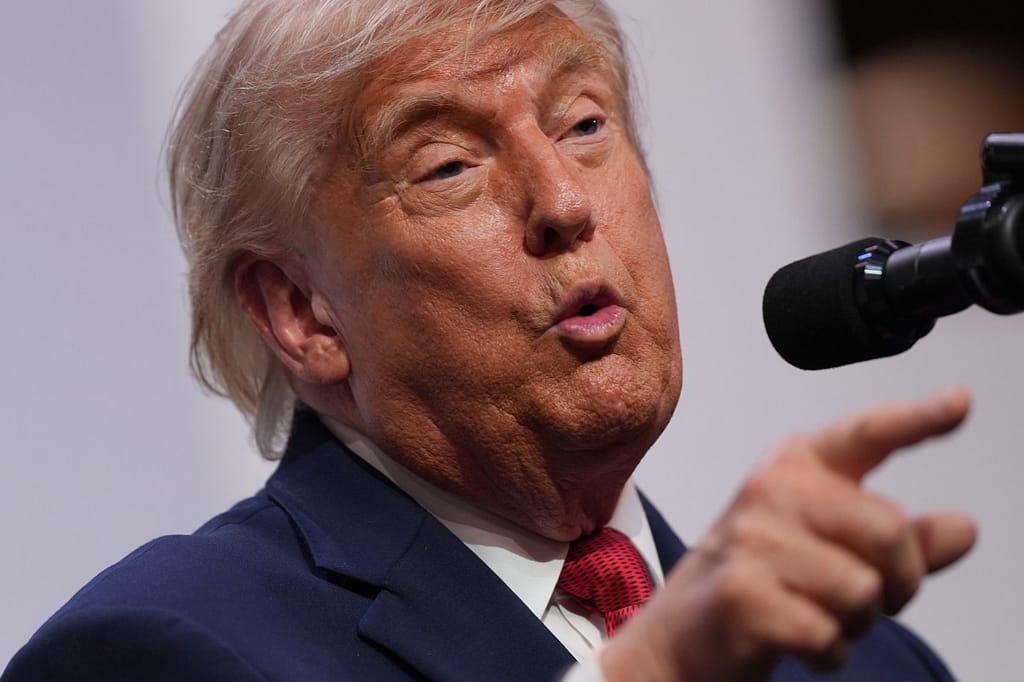
President Donald Trump‘s approval rating has recently fallen to some of the lowest levels of his second term, but a new poll finds he is still viewed more favorably by Americans than his predecessor, former President Joe Biden.
The findings from CNN come as Trump faces declining approval ratings amid concerns about the economy and the administration’s approach to Iran, issues that have at times revealed divisions within his own party. Still, the poll indicates that despite those challenges, Americans continue to view Trump somewhat more positively than Biden, a single-term president.
The survey, conducted by SSRS for CNN, found that 34 percent of Americans hold a favorable view of Trump, compared with 30 percent for Biden. Both trail former President Barack Obama, who received a 57 percent favorable rating.
The poll also highlighted the extent to which Obama’s public image has endured since leaving office. When asked which living president they admire most, a majority of respondents selected Obama, far outpacing Trump, Biden, George W. Bush and Bill Clinton. Obama left office more than eight years ago.
Biden’s favorability rating has continued to decline, falling from 59 percent when he took office to 33 percent when he left the White House and 30 percent in the latest poll.
Throughout Biden’s term, voters expressed concerns about inflation and the cost of living, while Republicans sharply criticized his handling of immigration and foreign policy. Gallup found in 2024 that immigration was the most commonly cited reason among those who disapproved of Biden. Questions about Biden’s age and fitness for office also became a persistent issue, particularly during the final year of his presidency.
Bush, whose presidency ended with low approval ratings amid the Iraq War and the financial crisis, now receives slightly more favorable than unfavorable ratings, reflecting a broader trend of former presidents often becoming more popular after leaving office, with the exception of Biden. The poll found Bush had a positive rating, with 42 percent viewing him favorably and 33 percent unfavorably.
Among Republicans, Trump remained overwhelmingly popular, with 79 percent expressing a favorable view of him. Democrats were similarly supportive of Biden, 71 percent, though his standing within his own party was somewhat weaker than Trump’s among Republicans. Independents viewed both men negatively, while backing Obama by 56 percent.
The poll of 2,480 people was conducted between May 7 and 31 with a margin of error of plus or minus 2.7 percentage points.
Silver Bulletin’s polling average showed Trump’s disapproval rating at 57.8 percent on Thursday, leaving him with a net approval rating of minus 18.7 points, having slumped to minus 21.2 in late May. By comparison, Biden’s net approval rating was minus 13.5 at a similar point in his presidency, while Trump stood at minus 11.2 points at this point during his first term, according to the polling aggregator.
Trump has recently lost favorability among a core group, rural voters, who have dipped by 32 percentage points since he returned to the White House, according to a new poll from NPR/PBS NewsHour/Marist.
Trump’s net approval rating among rural voters stood at -10 points in the new poll, marking a significant downturn in support from a voting bloc that was a key part of the coalition that bolstered his successful 2024 presidential campaign. In total, 43 percent of rural Americans said they approved of Trump, compared with 53 percent who said they disapproved of his job performance.
Overall, that poll found his approval rating at 36 percent, while 59 percent said they disapproved of the president. The poll surveyed 1,340 adults from June 8 to June 11, 2026, with a margin of error of plus or minus 3.3 percentage points.
The poll comes as Republicans and Democrats gear up for the midterm elections. Republicans currently hold a narrow 217-212 majority in the House, with one independent member and five vacant seats. Democrats point to overperformance in recent special elections and Trump’s declining approval ratings as reasons for optimism heading into the midterms, while Republicans maintain they are well-positioned to hold both the House and the Senate.
Historically, the party in the White House loses seats in midterms, and the GOP already holds razor-thin majorities in both chambers of Congress.
In 2018, during Trump’s first term midterms, Democrats gained 41 seats in the House and swept back into control. They lost seats against an unfavorable Senate map, but the large swing in the House helped them fight administration policies.
Several recent polls suggest Trump’s approval ratings have slipped amid concerns over the economy and U.S. policy toward Iran. While inflation and the cost of living remain top issues for many voters, the conflict in the Middle East has also tested support for the president and prompted disagreements among some Republicans over the extent of American involvement abroad. The impact the conflict has had on gas prices has particularly garnered economic concerns in recent weeks.
How the new peace deal to bring an end to the war will shape his approval remains to be seen.
White House spokesperson Kush Desai told Newsweek that Trump has “been clear about the fact that oil and gas prices—and thus overall inflation—will rapidly drop as soon as the Iran situation is resolved.”
“Prior to the start of Operation Epic Fury, American workers had recovered almost half of the real wage losses they experienced under Joe Biden thanks to this Administration’s commonsense agenda of deregulation, tax cuts, and energy abundance—an agenda that the Administration continues to implement to deliver more economic relief for the American people,” he said.
© 2026 Newsweek Digital LLC


