Trump to ask justices to review his suit against CNN – SCOTUSblog
Type to search articles, cases, and authors.
Press ↵ to view all results.
Yesterday, we announced our term-in-review event at Johns Hopkins University Bloomberg Center, which will take place on July 8 from 2:30 to 5:30 p.m. EDT and feature a fireside chat with the ACLU’s Cecillia Wang, who argued the birthright citizenship case before the Supreme Court; a discussion of the historical framework of birthright citizenship from Johns Hopkins professor Martha S. Jones; and a live taping of the Advisory Opinions podcast. To register your interest in attending, sign-up here.
The court on Monday passed on an opportunity to revisit a landmark ruling on student speech. It also declined to take up the case of a Mississippi man who alleges that prosecutors at his trial violated the Constitution’s ban on racial discrimination in jury selection, just two weeks after, citing that ban, it threw out a different Mississippi man’s conviction and death sentence. For more on Monday’s order list, see the On Site section below.
The court has indicated that it may announce opinions on Thursday at 10 a.m. EDT. We will be live blogging that morning beginning at 9:30.
After any opinion announcements on Thursday, the justices will meet in a private conference to discuss cases and vote on petitions for review. Orders from that conference are expected on Monday, June 15, at 9:30 a.m. EDT.
Erik Larson, Bloomberg
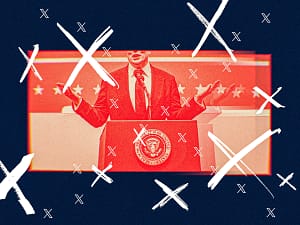
In a June 3 filing that was “formally docketed” by the court on Friday, “President Donald Trump told the US Supreme Court he intends to ask the justices to revive his $475 million defamation lawsuit against CNN over use of the term ‘Big Lie’ in reporting on his claim that the 2020 election was rigged against him,” according to Bloomberg. Trump’s legal team has “asked the Supreme Court for a 60-day extension to Aug. 15 to file his petition for review of a lower court’s dismissal of the case.” The lawsuit dates back to 2022, when Trump “accus[ed] the network of smearing him by frequently using the term ‘Big Lie’ to describe his unsubstantiated theory that Joe Biden’s victory in the 2020 election was the result of massive voter fraud.”
Kyle Cheney, Politico
On Monday, U.S. District Judge Leo Sorokin “blocked President Donald Trump’s bid to slap a $100,000 fee on employers who seek to hire foreign workers for specialized roles, labeling the policy an unauthorized ‘tax’ that required congressional approval,” according to Politico. “The Obama appointee’s ruling was rooted in two Supreme Court precedents: the ruling that upheld Obamacare by labeling its most controversial provision – a mandate for people to obtain health insurance – a ‘tax;’ and the justices’ recent rejection of Trump’s unilateral effort to impose global tariffs, concluding the president can only exercise taxing authority when given unambiguous approval by Congress.”
Caroline Vakil, The Hill
The Supreme Court’s “landmark decision” in Louisiana v. Callais on April 29, which “weaken[ed] the Voting Rights Act,” set in motion a wave of “[l]ast-minute redistricting in a handful of Southern states,” where “election officials, candidates and voters” are now “scrambl[ing] to figure out who’s on the ballot where,” according to The Hill. New congressional maps “coming just months out from November have created a mad dash for candidates, some of whom have had to quickly introduce themselves to new voters, while election officials race to educate voters on the new lines.”
Jerry Cornfield, Washington State Standard
Despite winning before a lower court, Washington state officials told the Supreme Court in a brief filed earlier this month that they support additional review of their congressional maps to ensure that “the manner in which the lines were drawn complies with the justices’” ruling in Callais, according to the Washington State Standard. Their brief came in response to a petition for review from a voter in the state and a state representative, who say the maps, which were redrawn to address a Voting Rights Act claim from a group of Hispanic voters, represent an unconstitutional racial gerrymander. Washington Attorney General Nick Brown told the Washington State Standard that “[t]his year’s elections are unlikely to be affected if the court keeps the case alive.”
Austin Sarat, Slate
In a column for Slate, Austin Sarat reflected on Gregg v. Georgia, the 1976 ruling in which the court, four years after it “had brought the death penalty to a halt in Furman v. Georgia” over concerns that it was being imposed in an arbitrary and capricious manner, held “that death sentences and executions could resume because the court was satisfied that the penalty could be administered in a way that guaranteed that capital defendants would be treated fairly and equally.” Sarat contended that Gregg should be reversed because, contrary to the court’s holding, the death penalty system was and “is rife with miscarriages of justice, racial discrimination, execution failures, and arbitrariness.”
By Amy Howe
The court on Monday turned down, without comment, an appeal by an elementary school student who was barred from wearing a baseball cap with a picture of an AR-15 and the words “Come and Take It” to school. It also granted the Trump administration’s request to send a challenge to a set of December 2021 rules that interpreted the Energy Policy Conservation Act to adopt standards for furnaces and water heaters back to the lower court. The justices did not add any new cases to their argument docket for the 2026-27 term.
By Ronald Collins
In his first In Other Words column, Ronald Collins explored the status of Obergefell v. Hodges, the court’s 2015 decision recognizing a constitutional right to same-sex marriage. As Collins noted, various organizations continue to push for Obergefell to be overruled by, for example, encouraging state lawmakers to call on the Supreme Court to revisit the issue, but these efforts “face several obstacles,” including the fact that most justices seem to view the issue as settled.
After puzzling over an interesting follow-up question about Pitchford v. Cain, Will Baude and Dan Epps unpack a summary vacatur in Whitton v. Dixon. Then, they break down the latest developments in the Allen v. Milligan line, discussing the future of the Purcell principle and whether the court should be unusually attentive to public appearances in election cases.
Authoring a majority opinion carries great weight, as the assigned justice sets the initial framework of the decision, controls the first draft, and shapes which arguments the majority does and does not address.
Although the court does not announce who will author each opinion before rulings are released, it is possible in advance to get some sense of who is likely to do so. This is because, as discussed in yesterday’s closer look, for each sitting the court tries to assign at least one majority opinion to each justice. Given this, once enough justices have written opinions for a sitting, one can use process of elimination to determine who remains likely to write. As Amy noted on our May 28 live blog while awaiting the morning’s decisions, “We still have three opinions that we’re waiting on from November: Landor, Fernandez, and Rutherford. Three justices have not yet written for November: Kavanaugh, Barrett, and Jackson.”
And while Landor v. Louisiana Department of Corrections didn’t come down, that day’s decisions included Rutherford v. United States and Fernandez v. United States, both authored by Justice Amy Coney Barrett.
As for opinions in general (majority and otherwise), a case’s content can serve as a decent predictor of who may write. As Zach noted on the same May 28 live blog in response to a question on the author of the birthright citizenship case (which is very likely to be Chief Justice John Roberts) “my (complete) guess is [Gorsuch] won’t have … much to say in that case (and may not write at all). Unless there’s an issue re: American Indians!” Indeed, Indian law has long been of great importance to Justice Neil Gorsuch, and one can almost guarantee he will write in such cases.
In a similar vein, Justice Ketanji Brown Jackson is the first former public defender to serve on the Supreme Court; she represented indigent clients from 2005 to 2007 before becoming a federal judge. Given her background, it is then perhaps unsurprising that Jackson has written several important criminal sentencing opinions, including the 5-4 decision in Hewitt v. United States on the First Step Act (and dissented in others).
And Justice Elena Kagan – who served in President Bill Clinton’s White House and taught administrative law at Harvard Law School (along with serving as its dean) before becoming the first female solicitor general – often writes on administrative law.
The justices themselves have, in public, rarely discussed the issue of who writes what. The assignment process happens entirely behind closed doors, without even the justices’ law clerks present. But the gravity of the opinion assignment decision is not new – many decades ago, Justice Felix Frankfurter once described opinion assignment as “perhaps the most delicate judgment demanded of the chief justice.”
“Where there is a right on the one side, and a corresponding duty imposed on the other, a refusal to perform such duty, on the reasonable request of the party entitled to demand it, will subject the officer to an action. But the party entitled to such services must request it in a proper manner. He has no right to accompany his demand with personal insult, or vulgar abuse of the officer. Those to whom the people have committed high trusts, are entitled at least to common courtesy, and are not bound to submit to the insolence or ill temper of those who disregard the decencies of social intercourse.”
— Justice Robert Cooper Grier in Boyden v. Burke (1852) (concerning the refusal to provide copies of patents following receipt of a “taunting, insulting, and libelous [letter], indicating a want of taste and temper”)
Kelsey Dallas is SCOTUSblog's managing editor and the primary author of the SCOTUStoday newsletter.
Nora is an editorial assistant at SCOTUSblog, based in Washington, D.C.
Recommended Citation: Kelsey Dallas & Nora Collins, Trump to ask justices to review his suit against CNN, SCOTUSblog (Jun. 9, 2026, 9:00 AM), https://www.scotusblog.com/2026/06/trump-to-ask-justices-to-review-his-suit-against-cnn/
Stay informed on every decision.
Receive essential Court news every morning.
The premier source for Supreme Court news, analysis, and data since 2002. Independent and non-partisan.
© 2026 SCOTUSblog. All rights reserved.
Tell us a bit about yourself and choose what you’d like to hear from us. You can change any of it any time in your account.