
Trump says talks with Iran back on after suspension despite Israel-Lebanon tensions – WJAC
Now
70°
Tue
68°
Wed
74°
by TAYLOR FISHMAN | The National News Desk
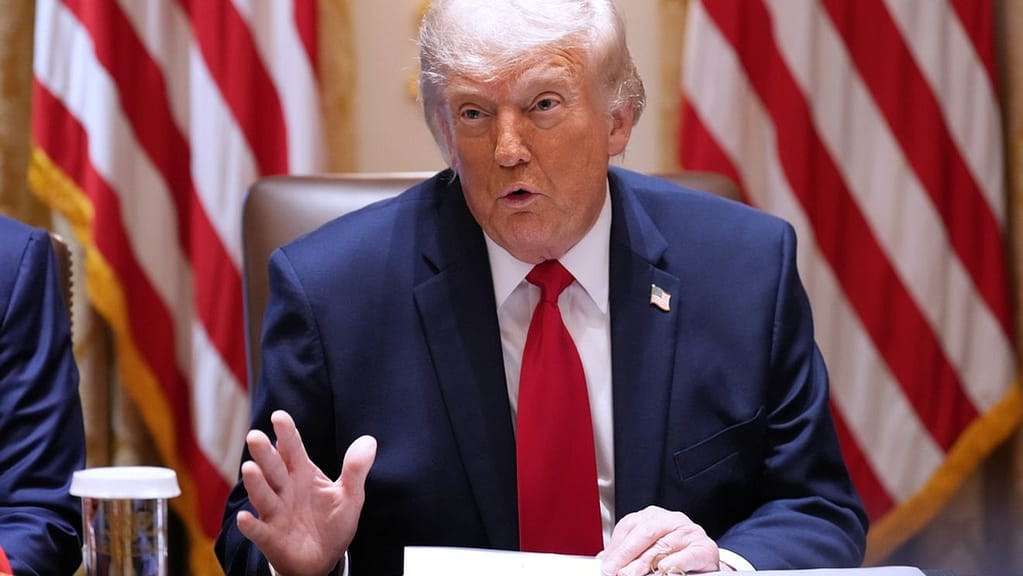
WASHINGTON (TNND) — President Donald Trump posted to Truth Social on Monday afternoon, stating that peace talks were continuing at a rapid pace after Iran suspended negotiations.
This comes after Iranian state media reported that Iran had suspended negotiations with the United States following Israel’s latest military operations in Lebanon.
Trump also posted on Truth Social that he spoke with Israeli Prime Minister Benjamin Netanyahu "and there will be no Troops going to Beirut," while Hezbollah agreed to stop all shooting.
The announcement comes just days after Trump reportedly sent back revisions to a proposed agreement that would extend the current ceasefire between the United States and Iran and potentially reopen the Strait of Hormuz, one of the world's most important shipping routes.
Iranian officials say recent military actions by both the United States and Israel have undermined confidence in the negotiating process.
The news agency also said Iran has “placed on their agenda the complete blockade of the Strait of Hormuz and the activation of other fronts, including the Bab el-Mandeb Strait.”
According to the report, Iran will not allow “dialogue” to take place until Israel withdraws from Lebanon and stops all attacks in Lebanon and Gaza.
Mohammad Bagher Ghalibaf, Iran’s lead negotiator and parliament speaker, accused the United States of violating the spirit of the ceasefire through its support for Israel and ongoing military operations.
The latest diplomatic breakdown comes as fighting continues to intensify across the region.
Israeli Prime Minister Benjamin Netanyahu ordered new strikes targeting Beirut’s Dahieh district, a Hezbollah stronghold in southern Beirut. An Israeli source told CNN that the operation was coordinated with the United States.
Meanwhile, Israeli forces announced they had captured Beaufort Castle, a historic Crusader-era fortress in southern Lebanon located roughly nine miles from the Israeli border. The strategic mountaintop position overlooks large portions of southern Lebanon and northern Israel and has long been viewed as one of the most important military locations in the region.
The capture follows days of intense fighting between Israeli forces and Hezbollah militants near the city of Nabatiyeh and marks Israel’s deepest advance into Lebanon in more than two decades.
Israeli Defense Minister Israel Katz said troops have raised an Israeli flag over the fortress and intend to maintain control of the position as military operations continue.
Israel's advance comes despite a ceasefire that has technically remained in place since April and just days before another round of direct talks between Israeli and Lebanese officials is scheduled to begin in the United States.
Secretary of State Marco Rubio has been actively involved in those diplomatic efforts, speaking with both Lebanese President Joseph Aoun and Prime Minister Netanyahu in an attempt to preserve negotiations.
According to a U.S. official familiar with the discussions, Rubio has proposed a framework in which Hezbollah would halt attacks against Israel while Israel would refrain from expanding military operations in Beirut.
Lebanese Parliament Speaker Nabih Berri, a close Hezbollah ally, said he could guarantee the group's immediate compliance with a ceasefire agreement if one is reached.
“But who will force Israel to stop its aggression?” Berri asked during remarks carried by Lebanese media.
France has also become increasingly involved in the diplomatic effort.
French Foreign Minister Jean-Noël Barrot has requested an emergency meeting of the United Nations Security Council, calling Israel’s expanding military operations in Lebanon “unacceptable.”
“Nothing can justify the prolongation of Israeli military operations in Lebanon and its increasingly deep occupation of Lebanese territory,” Barrot said.
Over the weekend, U.S. Central Command confirmed it carried out what it described as self-defense strikes against Iranian radar systems, drone command centers, and air defense infrastructure following what officials called aggressive actions by Iran.
The latest escalation comes as both sides continue exchanging military and diplomatic pressure while negotiations remain stalled.
The broader conflict began after the United States and Israel launched strikes against Iran on February 28. Two days later, Hezbollah opened a second front by firing rockets into northern Israel.
Since then, Israel has launched a ground invasion into southern Lebanon while Hezbollah has fired thousands of missiles and drones at Israeli targets.
Israeli officials say approximately 3,000 Hezbollah fighters have been killed since the conflict began. Hezbollah has not publicly released casualty figures.
The fighting has displaced more than one million people in Lebanon and left thousands dead, according to local authorities.
2026 Sinclair, Inc.