
Pelosi goes – now three camps fight for control of the Democrats – blue News
Gabriela Beck
2.6.2026
With Nancy Pelosi's withdrawal, her congressional seat will be up for grabs in the 2026 midterm elections for the first time in nearly 40 years. The primaries in San Francisco could bring about a change of direction for the US Democrats.
02.06.2026, 17:48
Gabriela Beck
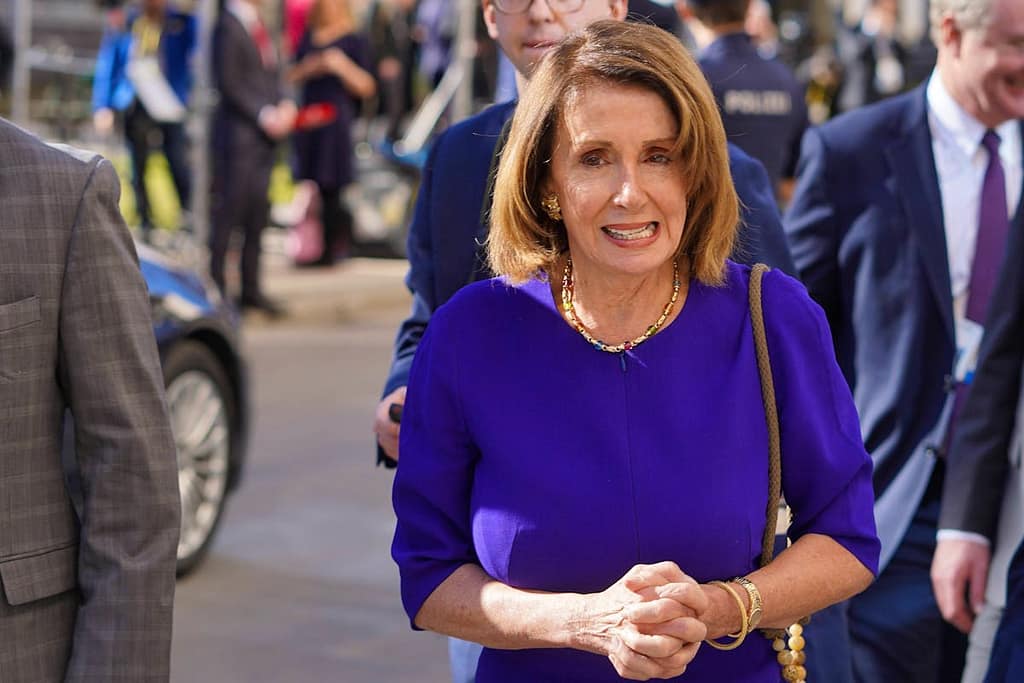
Nancy Pelosi has shaped the Democratic Party for decades. Now the former Speaker of the US House of Representatives is trying to establish her preferred candidate Connie Chan in San Francisco as her successor for her congressional seat.
Pelosi represents California's 11th congressional district in Washington, which includes most of San Francisco. The primary for the actual midterms will take place there on June 2.
The election campaign is increasingly developing into a power struggle between the party establishment, moderate forces and the left-wing party base – with a signal effect far beyond California.
Nancy Pelosi has announced that she will not run again in 2026. However, she will remain a member of Congress until the end of her term of office. The primary will take place in San Francisco on June 2, 2026. This will decide which candidates will be admitted to the actual election.
Pelosi's successor will then be elected at the midterm elections in November 2026. Pelosi will not leave Congress until January 3, 2027, when the new legislative term begins and the elected successor is sworn in.
California uses the so-called top-two system: all candidates run together, regardless of party. The two candidates with the most votes advance and compete against each other in the midterms in November.
This can lead to the following: Republicans run only two strong candidates. Democrats put forward many candidates, which spreads the Democratic votes across many people. The Republican votes, on the other hand, are concentrated on just two candidates.
In theory, two Republicans could then take first and second place, even though more voters are Democratic overall. This is precisely the scenario that the Democratic party leadership in California feared in some statewide elections in 2026, writes theGuardian.
Only to a limited extent. San Francisco's congressional district is one of the most Democratic constituencies in the USA. There is no real danger of the Republicans benefiting from the top-two system. The question in San Francisco is rather: which wing of the Democratic Party will prevail – the establishment, the political center or the party left?
Pelosi is usually classified as liberal to center-left. At the same time, she is clearly more pragmatic than many younger leftists. Pelosi is neither a socialist nor a critic of capitalism. She is more in favor of regulated capitalism. She supports trade unions and social programs, but is considered more business-friendly than the left-wing party base.
Scott Wiener is usually described as a pragmatic, moderate to liberal Democrat. He is known across the country for his so-called "YIMBY" ("Yes In My Backyard") policy and is committed to the construction of significantly more housing, including by private investors and simplified approval procedures. Wiener represents progressive positions on climate, LGBTQ and civil rights issues, but combines these with a more technocratic and business-friendly political style than many representatives of the party left.
Connie Chan belongs to the progressive wing of the Democratic Party, but is more in the tradition of the established San Francisco Democrats around Nancy Pelosi. Her priorities are workers' rights, trade unions, tenant protection, affordable housing and social security. Trade unions are among her most important supporters. In contrast to Scott Wiener, she is often more skeptical of new housing projects and market-based solutions and relies more heavily on government intervention and social housing.
Saikat Chakrabarti represents the left-wing reform wing of the Democratic Party and is considered a political ally of Bernie Sanders' movement. As co-founder of the Justice Democrats and co-architect of the Green New Deal, he is calling for a much more active role for the state in climate protection, housing construction, economic justice and the fight against political corruption. His candidacy is explicitly directed against the Democratic establishment. He argues that the party needs a fundamental renewal and a bolder economic policy agenda.
It is the first open congressional election in San Francisco in around 40 years because Pelosi has represented the constituency since 1987. Many observers therefore see the election as a test of how strong Pelosi's political network still is, whether a moderate Democrat (Scott Wiener) or a more left-wing candidate (Saikat Chakrabarti) will prevail, and in which direction the Democratic Party will develop after the retirement of its long-standing leader, according to theAmerican Prospect.
The dispute over direction revolves less around fundamental values than around the question of how much the state should intervene, how confrontational the Democrats should be and how far to the left the party should move.
State Senator Scott Wiener leads by double digits in the June 2 primary. Pelosi's favored candidate, San Francisco City Councilwoman Connie Chan, is in second or third place in the polls – neck-and-neck with Saikat Chakrabarti, a former chief of staff to Assemblywoman Alexandria Ocasio-Cortez and co-founder of the left-leaning "Justice Democrats," writes "Newsweek."
If Connie Chan wins, it will be seen as a sign that Pelosi's network and influence are still working, analyzes the "San Francisco Chronicle". If Scott Wiener wins, it would rather be a victory for the pragmatic, technocratic wing. If Saikat Chakrabarti wins, it would be a signal that the younger left wing of the party is becoming stronger and wants to break away from the Pelosi era.