Donald Trump and the age of the strongman president – The London School of Economics and Political Science
The latest social science books reviewed by academics and experts
The latest social science books reviewed by academics and experts
0 comments
Estimated reading time: 7 minutes
The latest social science books reviewed by academics and experts
0 comments
Estimated reading time: 7 minutes
Trajectory of Power by Terry M. Moe and William G. Howell explores how the expansion of US presidential power and the weakening of democratic checks in the modern era paved the way for Donald Trump. Though it focuses less on some of the deeper political-economic forces shaping today’s “strongman” politics, M. Kerem Coban finds the book an insightful, important contribution.
Trajectory of Power: The Rise of the Strongman Presidency. Terry M. Moe and William G. Howell. Princeton University Press. 2025.
The rise of populist and authoritarian leaders has prompted examination of how they navigate societal problems, in particular through centralising power within the executive office. Executive aggrandisement – when elected leaders legally dismantle or weaken checks and balances to concentrate more power within the executive branch – has increased globally, along with the crisis of democracy. Trajectory of Power examines these developments. It considers what has enabled a “strongman president” as Donald Trump builds on the cracks in the rattled administrative and political systems in the US.
As Bill Resh argued recently and Don Moynihan regularly discusses, rule of law and the administrative in the US have been under severe attack. Presidentialisation (ie, the increasing role of the executive in politics and policy processes) has reached a point where “it now threatens to substitute autocracy four our centuries-old system of self-government [in the US]” (12).
The book begins with an account of constitutionalism, the establishment and rise of the administrative state, and the norms and expectations about the president’s space for exercising executive power. This chapter discusses how the executive politics were set out both in legal terms and in normative ways. Chapter Two presents the “symmetric logic”: the executive needs the administrative state to implement policies and to provide order and welfare to society. At the same time, bureaucracy has been steadily expanding in size (eg, budget, personnel). Over time, the presidents downsized the ever-growing administrative state and centralised decision-making and policymaking authorities. Both Republican and Democratic presidents have made the Executive Office of the President a central node in executive politics: the National Security Council created in 1947, the Domestic Council established in late 1970 by Nixon, Clinton’s National Economic Council in 1993, among others (57-59).
Trump’s 2025 “Ensuring Accountability for All Agencies” executive order demonstrated the rise of executive power over regulatory agencies
At the same time, the autonomy of regulatory agencies has been undermined. Systematically employed by Nixon and other presidents, the Office of Information and Regulatory Affairs have institutionalised its authority over autonomous agencies (62-64). Most recently, Trump’s 2025 “Ensuring Accountability for All Agencies” executive order demonstrated the rise of executive power over these agencies, which also has its origins in the backlash against the regulatory state.
In Chapter Three Howell and Moe trace the ideational and political origins of the asymmetric logic – “antagonism toward the administrative state and presidential power as the primary mean of retrenching the administrative state” (79), as the (Republican) presidents increasingly perceived the administrative state as the “domestic political enemy” (95-98). Building on this ideational account, Chapter Four reflects on the shape and nature of these attacks. It begins by pointing to the “long-standing opposition of free-market conservatives to regulation, spending, and taxes” and “the demand of social conservatives for the defense of their cultural beliefs and values on race, religion, gender, and the family” (113). Yet, how could the executive address its constituency’s concerns while wrestling with the administrative state? The unitary executive theory (UET) posits that “[P]residents reign supreme within the executive branch – and thus, in essence, over the entire administrative state – and they are endowed with exclusive, inherent authority to control everyone and everything within it” (122). The book shows that both Republican and Democrat presidents exploited the UET for unilateral acts: Clinton’s “bombing campaign in Kosovo” (126), the Bush administration’s “extralegal counterterrorism program” (127), and Obama’s “war actions” (130).
Chapter Five notifies us about the current UET extremists who are acting against the “bedrock values of democracy”, which small and gradual acts from both sides of the political spectrum have significantly eroded, given their commitment to deconstruct the “established system” on behalf of “the people”, which is unchecked by democracy and the rule of law (152). Echoing Anti-system Politics, the authors point to the socio-cultural, political, and economic origins of today’s extremism. Like many other jurisdictions, such extremism has risen and become more visible and “noisy”. This can be explained by extreme inequalities, lower economic growth and higher unemployment rates, the loss of ideational anchors that inform programmatic and normative agendas, and everyday failures of decapacitated administrative state.
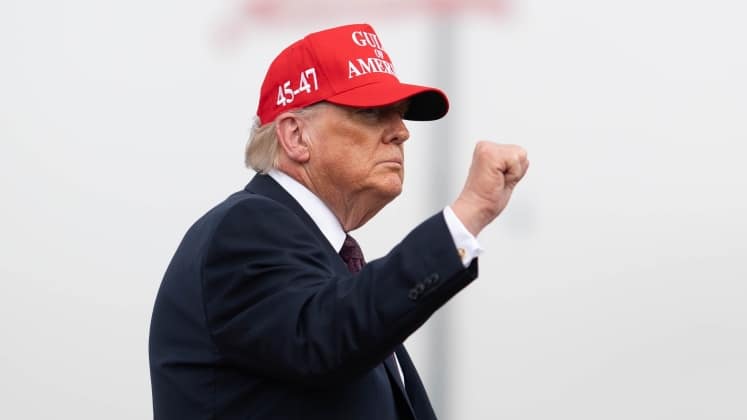
Chapter Six concludes with an argument that “[T]he UET soon became conservative orthodoxy” (212-213), and such extremism has enabled Trump to ascend as a “strongman president” through incessant attacks on bureaucracy (e.g., cutting funding for research, pressure on bureaucrats, the DOGE experiment with Elon Musk), “weaponising” the judiciary against opponents and instrumentalising it for nepotism, overthrowing the 2020 election, among others.
Unfortunately, Trajectory of Power cautions us that the Congress, the judiciary, the administrative, and the “people” cannot alone be a veto player against the “strongman president”. For instance, the “people” are not knowledgeable about how the democratic system works (226); or Trump’s loyalist appointments can insulate bureaucracy from its natural and legal tendencies to pushback against presidents’ unilateral acts (238-241). The book ends with possible trajectories in a context where one cannot rely on any of these potential veto players: if the “strongman president” cannot deliver, the constituencies may develop alienation as their expectations are not satisfied; or short-term gains address anger and dissatisfaction but with diminishing returns in the future.
Trajectory of Power reveals the dark origins of executive power and how it has expanded in recent times. While it provides a detailed mix of a historical, actor-based, ideational, and institutional analyses, the book could have incorporated a broader outlook. Firstly, it spends too much ink on individuals that craft the ideational bases of the UET. The book refers to political, economic, and socio-cultural factors enabling the “strongman presidency”, but it misses a deeper debate about the elites, elite circulation, and elite coalitions.
The accumulation regime is cracking down on the administrative state. It does so by eroding further the remaining institutional, agential, ideational, and structural bases of transparency, rule of law, and accountability, the core pillars of democratic governance.
Current populist and authoritarian leaders come with their own elites. The kleptocratic, or oligarchic, elite circulation has become so “dirty” that “corrupt elites” are being replaced by equally “corrupt elites” with self-enrichment and insider trading tendencies. While the “new elite” is trying to replace the “old elite” and without an anchored ideological map, the new elite tries to hijack the administrative state and dismantle the rule of law. Such elite circulation clearly has a politico-economic basis. Replacing the older version of neoliberalism, the accumulation regime is cracking down on the administrative state. It does so by “politicising to depoliticise”, i.e., eroding further the remaining institutional, agential, ideational, and structural bases of transparency, rule of law, and accountability, the core pillars of democratic governance.
This points us to a significant gap in the book’s scholarly framework: bringing together political economy and public policy and administration scholarships. The partial analyses miss a broader picture where the political economic context sets the stage, policy and institutional arrangements define the “decor”, and actors’ interactions on that stage. A broader understanding of the interactions between politico-economic contexts and politics-administration nexus based on cross-fertilisation could have enabled us to empower veto players against the “strongman presidents”.
A must-read for whoever wishes to develop a sense of why and how the core of the executive has become a severe threat to the administrative state and democracy.
Finally, the book tends to treat Democrats as not having a broad impact on the trajectory of power. They do discuss Democrats’ mistakes, but if a system is flawed, and if Democrats are part of it, the book reads as a partisan cry against the allegedly powerful (Republican) president. Still, Howell and Moe guide us through the trajectory of power and notify us about the threats of the “strongman presidency”. The book is therefore a must-read for whoever wishes to develop a sense of why and how the core of the executive has become a severe threat to the administrative state and democracy.
Note: This review gives the views of the author and not the position of the LSE Review of Books blog, nor of the London School of Economics and Political Science.
Main image: Rawpixel.com on Shutterstock.
Enjoyed this post? Subscribe to our newsletter for a round-up of the latest reviews sent straight to your inbox every other Tuesday.
Dr M Kerem Coban is a Lecturer in Public Policy and Management in the School of Finance and Management at SOAS, University of London (https://www.soas.ac.uk/about/m-kerem-coban), a Global Network Scholar in the Department of Political Science and Public Administration, Kadir Has University. Kerem is also a Research Associate at LAGAPE, UNIL. His research interests lie at the intersection of comparative public policy, regulatory governance, and international political economy.
Enter your email address to subscribe to this blog and receive notifications of new posts by email.
© 2026 London School of Economics and Political Science (LSE). LSE Blogs.