
Did Elon Musk Use Starlink Satellites To Rig The 2024 Election? – mitchthelawyer.substack.com
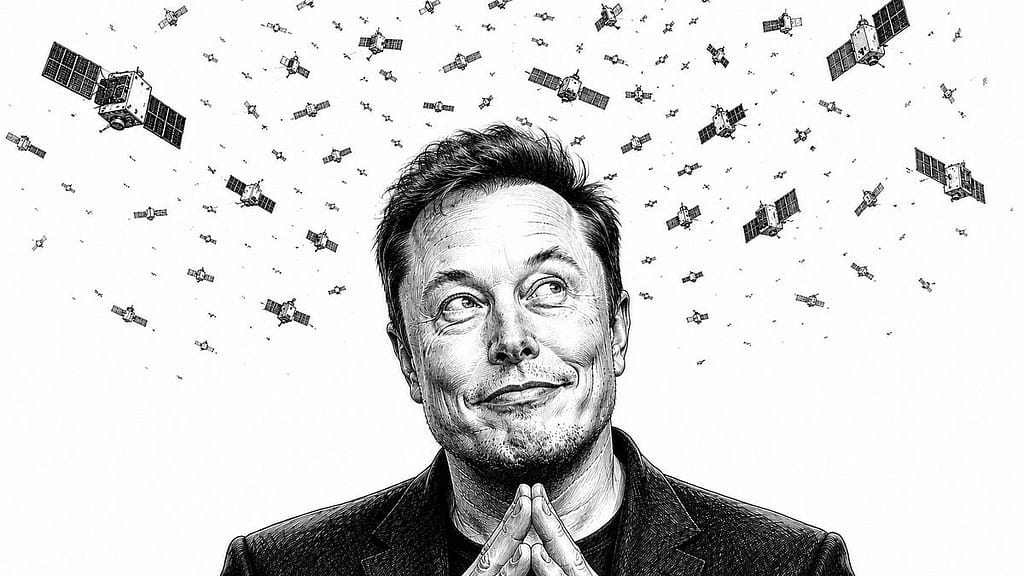
This post is about a set of recent claims Ashley St. Clair is making about Elon Musk and the 2024 election. You need to know who is talking before you decide what to do with what is being said. You should also know where I stand.
I am not a fan of Elon Musk. He has spent years posting statements I find harmful, inaccurate, and divisive, and I have said so plainly. I am telling you that up front because I want you to have full context as you weigh the thoughts, facts, and opinions I share below. My goal here is to follow the evidence wherever it goes.
So start with who Ashley is. She is a right-leaning influencer and commentator who has spent close to a decade in MAGA media and worked with conservative brands. She is also the mother of one of Elon Musk’s children.
She had a relationship with Musk that began in 2023 after he messaged her on X. They have a son together, Romulus, born in September 2024. She announced his existence publicly on Valentine’s Day 2025, writing that she had welcomed a baby five months earlier and that Musk was the father. The child’s name was not confirmed as Romulus until April 2026. This clip from The David Pakman Show shares her MAGA story:
Ashley is not a stranger throwing rocks from the outside. This is someone who was close to him during the exact window she is now talking about.
Now she’s saying something explosive. In an 18-minute TikTok video posted in May 2026, and in short clips spreading across Instagram and other platforms, she claims Musk told her he used advanced technology to help Donald Trump win the 2024 presidential election. She does not stay vague. She names it. Starlink satellites. What she says Musk called “10,000 lasers in space.” Access to sensitive voting data.
Sit with that for a second. She is alleging that one of the most powerful men on the planet reached into a presidential election and tilted it.
Ashley St. Clair is a conservative, self-described anti-woke social media personality. She is a writer and political strategist who has worked with right-leaning media and brands. She is the author of the children’s book Elephants Are Not Birds.
She and Musk share a son. She announced the birth on X on Valentine’s Day 2025, writing, “Five months ago, I welcomed a new baby into the world. Elon Musk is the father.” She said she had kept it private to protect the child and went public only because tabloids were about to report it anyway. A later Wall Street Journal report cited a Labcorp paternity test putting Musk’s probability of paternity at 99.9999 percent.
She is now in a bitter, very public split with Musk. The two are fighting over custody of their son, with both sides having sought sole custody. They are also locked in dueling lawsuits over Musk’s AI chatbot Grok. In January 2026, St. Clair sued Musk’s company xAI in New York, alleging that Grok generated and circulated sexually explicit deepfake images of her without her consent.
Her suit alleges that some of those images were built from photos of her taken when she was 14 years old. The same day she filed, xAI sued her in federal court in Texas, claiming she violated its terms of service and seeking damages of more than 75,000 dollars. That conflict is the backdrop for everything she is now saying about the election. Keep it in mind.
Her current election claims come from the May 2026 TikTok video, from clips circulating on Instagram and other platforms, and from write-ups on partisan Substack and social pages.
She says Musk told her he used his technology to affect or rig the 2024 election outcome in favor of Donald Trump. She says that in October 2024 Musk told her he was ready to release what he called his “anomaly in the matrix,” and described it as “10,000 lasers in space,” using that phrase to refer to his Starlink satellites. She recounts him saying, “This is not a piece they’ll see on the chessboard.” She says she chose not to ask follow-up questions because she did not want to end up in a deposition, and she claims Musk told her, “Very wise.”
She says that after that exchange Musk began sending her internal data from America PAC, the super PAC he funded to support Trump, showing what she called real-time delta vote metrics. She describes that data as far beyond anything traditional campaign tools could produce. She says she was at Mar-a-Lago on election night and that Musk left early after telling her his team already knew, hours before the result was called, that Trump had won, because they had the best real-time data.
She frames all of this as a matter of conscience. She says that if people thought Cambridge Analytica was bad, this technology is far more powerful and is destroying democracy. She also claims she was offered payment to stay silent and refused. She says she recorded everything and sent backups to a third party, with instructions to release them if anything happened to her. She has described that setup as a dead man’s switch.
Partisan and conspiratorial accounts that have spent more than a year claiming Starlink stole the 2024 election are amplifying her hard. They are treating her as the insider confirmation their narrative always lacked.
A source described as close to Musk has adamantly denied her claims. Neither Musk himself, nor representatives for America PAC, nor SpaceX provided comment on the allegations.
Coverage of her claims consistently notes the context. Her allegations are landing in the middle of a hostile legal and personal war with Musk over Grok and over custody of their son. That does not make her wrong. It does mean any responsible reader weighs motive and timing.
There is no on-record material in which Musk himself admits to or describes the kind of direct election rigging she alleges. The only primary material is the snippets of her own video, plus paraphrases and commentary from third-party outlets and posters.
Well before St. Clair’s May 2026 video, conspiracy theories circulated claiming Starlink was used to upload or alter vote counts in swing states in 2024 to favor Trump.
Posts on Threads and other platforms claimed Starlink satellites uploaded votes in swing states and that satellites were exploding to erase evidence. That last claim has a mundane explanation. A Starlink satellite did reenter the atmosphere and burn up on November 10, 2024. Experts pointed out that these reentries happen almost daily and are not noteworthy.
For what it’s worth, Meta’s fact-checking program flagged the Starlink posts as misinformation. Election officials and security experts said consistently that there is no evidence Starlink or any satellite system altered vote totals. Analysts noted that Starlink draws conspiracy theories mainly because Musk owns it, not because there is any technical evidence of electoral use.
St. Clair’s new allegations are being slotted directly into that pre-existing narrative. They are being offered as the insider source the theory never had.
Independent reporting and official statements about the 2024 election and Starlink cut sharply against the idea of rigging by satellites or lasers.
Voting machines and ballot-marking devices are generally not connected to the internet. State laws and federal guidelines discourage or prohibit connecting tabulators to any network. That alone makes direct hacking of vote totals through Starlink extremely difficult.
In some jurisdictions tabulators briefly connect to transmit unofficial results after polls close. Those transmissions are logged and cross-checked against paper records and local tallies.
A detailed fact-check in November 2024 found no evidence that Starlink was used to manipulate votes or alter counts in swing states. The swing states of Arizona, Georgia, Michigan, Nevada, North Carolina, Pennsylvania, and Wisconsin all keep voting equipment disconnected during tabulation.
Officials in North Carolina and other states that received Starlink equipment after hurricanes said plainly that Starlink was not used to tabulate or upload vote counts. In Tulare County, California, the one documented case of Starlink touching election infrastructure in 2024, it was used only to connect electronic pollbooks to the county’s voter database in rural areas with poor broadband. Officials stated that vote tabulators in Tulare were not connected to Starlink and stayed offline.
Election-security experts and agencies have repeatedly found no evidence that voting systems were compromised by Musk-linked technology in 2020 or 2024. Jen Easterly, then director of the Cybersecurity and Infrastructure Security Agency, said after the 2024 election that the agency had no evidence of any malicious activity that had a material impact on the security or integrity of election infrastructure.
There is no public, evidence-based finding that Musk or his companies altered vote counts or hacked election systems. There is substantial, well-documented evidence that Musk used his platform X to spread false and misleading election narratives.
The Center for Countering Digital Hate tracked this. In an August 2024 report covering January through July, the group identified 50 Musk posts about the US elections that independent fact-checkers had debunked, collectively viewed nearly 1.2 billion times. An updated CCDH analysis released closer to Election Day put the count higher, at least 87 false or misleading election posts amassing roughly 2 billion views. None of those posts carried a Community Note.
Those posts pushed themes like Democrats importing voters, exaggerated claims about immigrant impact on representation, and misleading statements about mail-in ballot fraud. That body of evidence supports the idea that Musk shaped public opinion through misinformation. It does not demonstrate vote-count manipulation or satellite-based rigging of results. Those are two different things, and the difference is the whole story.
Put it all together.
Ashley St. Clair is making serious insider-style allegations that Musk privately boasted of using Starlink, space-based lasers, and access to sensitive voting data to rig the 2024 election for Trump. The only current corroboration is her own statements and sympathetic commentary from outlets that have pushed an election-rigging narrative about Musk for over a year.
A source close to Musk denies her claims. There are strong structural reasons, rooted in how voting systems are designed and secured, that make the specific satellite-rigging scenario she describes highly implausible according to election officials and independent experts.
There is real, documented evidence that Musk spread false and misleading election information on X in 2024. There is no public, evidence-based finding that he or his companies altered vote counts or hacked election systems.
Look at this through the eyes of a trial lawyer. Her statements look like uncorroborated allegations from a former partner now locked in litigation with the man she is accusing, layered on top of a conspiracy narrative that already existed. They do not look like a claim backed by forensic findings, investigative reporting, or an official inquiry. That is not a verdict. It is a standard of proof. Hold her to it.
Could Starlink actually do what she describes? Look at the architecture.
Starlink’s documented role in US elections is extremely limited. It has provided internet connectivity for voter check-in systems in a small number of rural sites. The way US voting systems are built makes satellite-driven rigging technically implausible according to election-security experts and officials. Starlink could in theory carry ordinary internet traffic. It is not wired into vote-tabulation systems in a way that would let anyone flip outcomes without being caught.
Here is what Starlink is, how US election technology works, what has actually been observed, and what would have to be true for the rigging scenario to hold up.
What Starlink actually is
Starlink is a satellite internet service. User terminals, the dishes on the ground, connect upward to a constellation of thousands of low-Earth-orbit satellites, which route traffic to ground stations tied into the regular internet.
Technically, that makes Starlink just another internet service provider and transport layer. It can carry any normal internet protocol. It does not reach into devices that are not using it as their network path. Its performance is good enough for typical broadband needs, in the range of 50 to 100 megabits per second, with higher latency than fiber. It is not an exotic, physics-breaking system. It is an alternate on-ramp to the same internet.
If a device is not plugged into a Starlink terminal or otherwise routing through Starlink, Starlink has no special access to it.
How US voting systems are built
Election officials and independent experts point to a few core design features that decide whether Starlink could flip votes.
Tabulators and ballot-marking devices are generally offline. State laws and federal guidelines discourage or outright prohibit connecting tabulators to the internet by any means, including satellite. North Carolina’s elections board explained that ballot-marking devices and voting machines are not connected to the internet, and that satellite internet was not used to tabulate or upload vote counts. Swing states including Arizona, Georgia, Michigan, Nevada, Pennsylvania, and Wisconsin follow similar policies. Voting equipment stays disconnected during tabulation, and any brief connection to transmit unofficial results is logged and compared against local records and paper ballots.
Paper ballots and audits backstop the software. Risk-limiting audits, canvasses, and certification compare paper records against reported digital tallies. Large-scale tampering that changes an outcome is very likely to be caught.
For a remote attacker, riding any internet service provider, to meaningfully and undetectably change results, that attacker needs two things at once. Connectivity into the tabulation environment. And a way to avoid being caught in audits that compare back to paper. Both are major hurdles.
Where Starlink has actually been used in elections
Documented use of Starlink in US elections is narrow and does not involve vote counting. In the 2024 election, fact-checkers found one concrete case of Starlink in election infrastructure. Tulare County, California used it to give electronic pollbooks access to the county’s voter database in rural areas with poor broadband. Officials stated explicitly that Tulare’s vote tabulators were not connected to Starlink and stayed offline. Starlink only let pollworkers check voter registrations.
Some rural sites in Arizona and California used Starlink in the same way, for electronic pollbooks or registration checks, not for tabulation. Swing-state officials in Georgia, North Carolina, and elsewhere told the Associated Press, AFP, and other outlets that their voting machines and tabulators are not connected to Starlink or to the internet at all.
Pollbooks matter for voter access, deciding who gets a regular ballot versus a provisional one. They are separate from the systems that add up votes, and they can be cross-checked.
The Starlink-rigging theory usually assumes something like this. Starlink connected to machines or backup power units at polling places, silently injected or altered vote data in swing states, and then satellites were deorbited or blown up to hide the trail.
When those claims were examined, fact-checks by the Associated Press, Al Jazeera, AFP, and others found no evidence that Starlink was used to alter vote counts. Independent election-systems experts, including MIT’s Charles Stewart and David Becker of the Center for Election Innovation and Research, have said this kind of hack through Starlink would be essentially impossible given that tabulators are not internet-connected. CISA director Jen Easterly stated there was no evidence of malicious activity that had a material impact on the security or integrity of election infrastructure in 2024. Wired and other outlets pointed out that Starlink’s presence at a few polling sites, for pollbooks, became the seed for inflated claims that it ran the election.
The mechanism the conspiracy theory describes presupposes connectivity and system architecture that the actual election infrastructure does not have.
Give the theory its best day in court. Ask what it would take, in principle, for Starlink to be used to manipulate an election.
You would need physical and network presence at key sites. Starlink dishes installed at a large number of critical election offices or polling places, with tabulation systems actually routing their traffic over those links. In reality, documented use is limited to pollbooks at a small number of rural sites, and tabulators are offline.
You would need vulnerable endpoints. Even if a tabulator or election management system were online through Starlink, you would still need an exploitable vulnerability or misconfiguration allowing remote code execution or data tampering. US voting systems have known security weaknesses, but those threats are generally framed around local access or misconfigured networks, not an adversary riding over one specific internet service provider.
You would need a coordinated, large-scale compromise. To swing a presidential result, you would have to alter enough votes in enough jurisdictions to change statewide outcomes, all while keeping the changes consistent with pollbooks, local precinct tapes, county tallies, and statewide canvasses. Risk-limiting audits and paper ballots make altering large numbers of votes very hard without creating detectable discrepancies.
And you would need the whole operation to go undetected. Network forensics, logs, and standard canvass and audit procedures would all have to miss unexplained gaps between paper and digital records. Election experts say that is unlikely at scale.
For Starlink to be the attack vector, you would first have to break the fundamental offline-plus-paper-backstop architecture that has been independently confirmed to exist, and then also evade multiple layers of procedural and statistical checks.
Flipping votes by satellite looks technically implausible. Starlink, and Musk-controlled platforms more broadly, could still matter in more realistic ways.
The information environment is the real lever. Starlink merely carries internet traffic. X is where Musk moves opinion. Misleading election content from his account reached an estimated 1.2 billion views across one set of debunked posts through mid-2024, with later analysis putting the figure near 2 billion across a wider set. That is influence on voters. It is not influence on vote-counting.
Local connectivity reliability is a second concern. In rural areas, if Starlink provides the only connection for electronic pollbooks and it fails, through accident or attack, that could cause localized disruptions. Long lines. More provisional ballots. In an extreme case, temporary outages. That is an availability problem, a denial-of-service problem. It is not a secret capability to flip the numbers.
A future hypothetical risk exists if architectures change. Some commentators have imagined a future where systems like Starlink become the backbone for more critical infrastructure, including elections, which would raise the stakes of who controls them. For now, election officials stress that tabulators remain offline and are not dependent on any single internet service provider.
Starlink’s documented role in US elections has been limited to connectivity for pollbooks and voter check-in in a very small number of locations. It has not been wired into vote-counting systems.
Election officials across swing states and independent security experts agree that tabulators are not connected to the internet, including Starlink, and that there is no evidence of Starlink being used to alter vote totals.
Given paper ballots, risk-limiting audits, and the offline design, the high-level, satellite-driven scenario St. Clair alleges is viewed in the professional election-security community as implausible and inconsistent with known system architecture.
If I were retained counsel advising a court, a commission, or a client, the technical-risk picture points one direction. Starlink is one more internet service provider that can carry traffic. It is not a magic backdoor into US voting machines. The existing configuration and controls make the claimed secret rigging scenario extremely hard to reconcile with the facts on the ground.
So here is where that leaves you. A woman who was close to Elon Musk, and is now at war with him in court, has made a stunning accusation. The accusation has no independent proof behind it, and the technology she names does not work the way the theory needs it to work. Watch what evidence she produces next. Until then, treat an allegation as an allegation. You decide.
Mitch Jackson, Esq.
Uncensored Objection. Law. Facts. No Spin. is a reader-supported publication. To receive new posts and support my work, consider becoming a free or paid subscriber.
Have you investigated the findings of electiontruthalliance.org?
The anomalies they report, at least as I understand it, rely on voting machines having been tampered with prior to the election. Extremely interesting analysis of official voting data.
Apparently Elon Musk’s kid giggled something about dad’s secret tricks as well in some video. There’s also been talk about some issue with the batteries in election machines being fallible to tampering?
No posts