DeSantis on property tax; Trump cabinet meeting – Bay News 9
Get the best experience and stay connected to your community with our Spectrum News app. Learn More
Continue in Browser
Get hyperlocal forecasts, radar and weather alerts.
Please enter a valid zipcode.
Save
Florida Gov. Ron DeSantis announces a new special session commited to property tax reform, and President Donald Trump discusses Iran’s control of the Strait of Hormuz in a cabinet meeting.
Gov. Ron DeSantis is calling for a special session for lawmakers to discuss property tax relief for Floridians.
During a news conference Wednesday in Tampa, DeSantis said he is issuing a proclamation calling for a special session to begin June 1 to put a property tax reform measure before voters for a “yes or no” question on the November ballot.
“There is a lot that has gone into this,” DeSantis said. “Philosophically, I believe — and I think a lot of people believe — taxing something you own repeatedly, which is a property tax, is the worst way to do taxation. You pay all these taxes to acquire that property and then year after year you have to write a check just for the privilege to maintain ownership of something that is supposedly yours.”
The governor said the proposal would eventually eliminate property taxes for more than 90% of Floridians.
According to propertyexemption.com, the key elements of the proposal are:
The proposal would require passing the legislature by 60% first and then be approved by 60% of the voters.
Also, DeSantis said any shortfalls in budgets to local governments could be covered by a state trust.
Mark Middleton, a real estate agent in the Tampa Bay area, supports the plan for full elimination over time.
“Home ownership is one of the biggest drivers of wealth,” he said. “People that own homes for a long time are able to create a much higher net worth than people that rent.”
He does worry that it could affect other services for local governments.
“We still want to be able to provide these community services that people depend on — police and fire departments — because that sense of security that people need to have is really important,” Middleton said. “We don’t want to hurt these small cities.”
The governor’s proposal would require local governments to use remaining property taxes only for public safety, infrastructure, education and natural disasters.
Middleton says this could drive more people to home ownership and give current homeowners a sense of security that they won’t have to worry about the homestead tax increasing and hitting them in the wallet.
“I believe that it supports the American dream of home ownership right here in the state of Florida,” he said.
President Donald Trump insists any deal with Iran would not allow that country to retain control of the Strait of Hormuz.
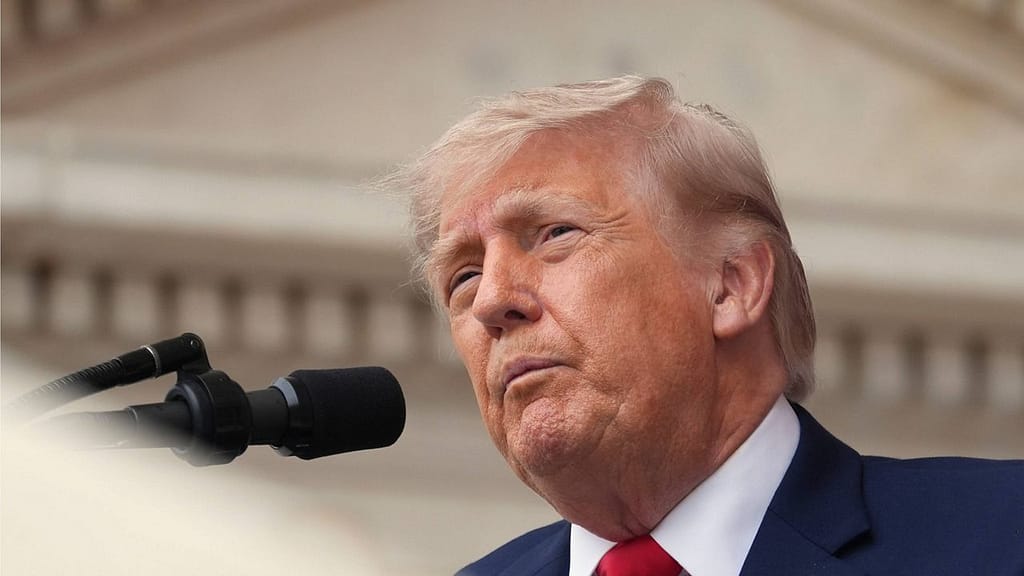
Speaking at a Cabinet meeting Wednesday, Trump said the “strait will be open to everybody. It’s international waters.”
With the strait effectively closed for nearly three months, prompting U.S. gas prices to increase by about 50% since the Iran war began, Trump said he wasn’t feeling economically pressured to reopen the waterway that handles about 20% of the world’s oil during peacetime.
“The primary urgency is that we can’t let Iran have a nuclear weapon,” Trump said, reiterating a point he has often made since the U.S. and Israel first attacked the country.
He also said he expects gas prices to be lower than before the war began — a sentiment Treasury Secretary Scott Bessent expressed during the meeting when he said prices are “transitory” and “oil will be lower than pre-conflict levels when this ends.”
When that will be, however, is unclear. Over the weekend, the president said the Iran deal was “largely negotiated,” but on Wednesday he said Iran is “negotiating on fumes.”
Trump said he will not consider easing sanctions on the country, nor will he consent to an agreement that calls for further talks on uranium.
“One of the things that will happen is the strait will open immediately. Immediately,” he said. “But it’s got to be perfect. I didn’t do this for getting a crummy agreement.”
“We can make a great deal with this guy right here, but it’s a lot nastier,” Trump said, referencing Defense Secretary Pete Hegseth, who, earlier in the meeting, said Iran “cried uncle to talk” after the U.S. implemented its naval blockade of the strait in mid-April.
“We know from the intel that their economy is hurting big time because that is their lifeblood,” Hegseth said, adding that the conflict would be resolved through negotiations leading to an assurance that Iran never develops a nuclear weapon or by going “back to the War Department to finish the job that way.”
Last month, the Pentagon said the cost of the Iran war was $29 billion — a figure that included munitions replacement, equipment maintenance and initial combat operations. The Harvard Kennedy School estimates continuing the war could cost U.S. taxpayers up to $2 billion per day.