
Live – US says any Hormuz breakthrough hinges on Iran compliance | Iran International – ایران اینترنشنال
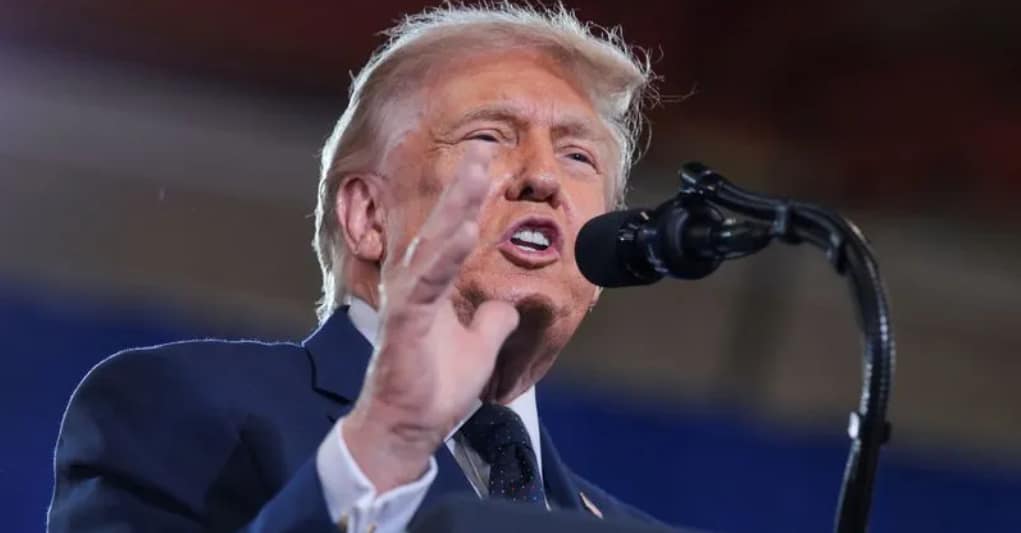
US President Donald Trump on Sunday said he had told his representatives not to rush into a deal with Iran, adding that the US blockade would remain “in full force and effect” until an agreement was reached, certified and signed.
US Secretary of State Marco Rubio said on Sunday that progress had been made over the past 48 hours on an outline that “will require full Iranian acceptance and then compliance” to resolve the Strait of Hormuz crisis.
Iran’s Revolutionary Guards navy said on Sunday that 33 vessels crossed the Strait of Hormuz over the past 24 hours after receiving permits.
IRGC-linked Tasnim News reported on Sunday that Iran has not accepted any action on the nuclear issue at this stage of talks with the United States.
Republican Senator Thom Tillis publicly questioned the Trump administration’s wartime claims about Iran’s nuclear and military capabilities, saying current diplomatic discussions appear inconsistent with earlier assertions that Tehran had been “obliterated.”
Speaking to CNN, Tillis said he was struggling to reconcile past statements by Defense Secretary Pete Hegseth and other officials with reports that Washington may now accept arrangements allowing nuclear material to remain inside Iran.
“Now we’re talking about a posture where we may accept the nuclear material may remain in Iran,” Tillis said. “How does that make sense at all?”
“There are a lot of things that need to be explained,” he added.
Qatar and Saudi Arabia have stepped up consultations over the latest round of diplomacy between Tehran and Washington, as regional players push to prevent tensions from sliding back toward conflict.
Qatar’s foreign ministry said Prime Minister Sheikh Mohammed bin Abdulrahman Al Thani and Saudi Foreign Minister Prince Faisal bin Farhan discussed ongoing negotiations involving Iran and the United States during a phone call.
The two sides also reviewed regional mediation efforts and coordination aimed at supporting de-escalation and broader stability, according to the ministry.
Senior adviser to the commander of the Islamic Revolutionary Guard Corps (IRGC) Mohammadreza Naghdi said Iran’s enemies failed to destroy the country’s naval capabilities during the recent war, arguing that otherwise US warships would already be moving through the Strait of Hormuz.
“If they had destroyed the navy, their ships would have set off and passed through the strait,” Naghdi said in remarks carried by IRGC-linked Fars News.
He also claimed Israel launched 2,100 projectiles and 300 surface-to-surface missiles at Abu Musa island during the conflict but that Iranian forces “stood firm without any weakness.”
Naghdi further said Israel attempted to assassinate the IRGC’s commander-in-chief during the war but “missed the target and failed.”
US President Donald Trump is backing away from the deal with Iran, likely under extreme internal pressure, an Al Jazeera reporter said on X citing two sources.
US President Donald Trump told leaders of several Arab and other Muslim countries during a Saturday conference call that if a deal to end the Iran war is achieved he wants their nations to sign peace agreements with Israel, Axios reported citing two US officials with direct knowledge of the call.
The United States is “begging” to negotiate with the Islamic Republic, Ebrahim Rezaei, spokesman for the Iranian parliament’s national security and foreign policy committee said.
Ebrahim Rezaei added that Iran had not requested talks with Washington or a ceasefire “even once” since the start of the war.
Mohammad Reza Naqdi, senior adviser to the commander of Iran’s Revolutionary Guards, warned that country's adversaries would suffer an “irreparable blow” if they made a mistake.
Naqdi also said the main goal of the war had been to overthrow the Islamic Republic, but claimed “the exact opposite happened” and that the foundations of the system had been strengthened instead.
US Secretary of State Marco Rubio said a nuclear agreement with Iran could not be reached “in 72 hours on the back of a napkin.”
“We’re not kicking it till later. Nuclear talks are highly technical matters,” Rubio said in an interview with the New York Times.
Rubio added that “seven or eight countries in the region” supported the current approach to negotiations with Iran.
The United States will not sign a deal with Iran unless Tehran gives up its highly enriched uranium, Fox News reporter Kayleigh McEnany reported, citing a senior Trump administration official.
“No dust, no deal,” the official was quoted as saying, referring to highly enriched uranium that President Donald Trump has described as “nuclear dust.”
The official said the United States and Iran were “95%” toward a deal and had agreed in principle on a framework covering “the nuclear stockpile” and “the Strait of Hormuz,” but were still negotiating language.
“We don’t have a deal until there is a deal,” the official said, adding that the US could resume military strikes if talks failed.
American negotiators believe Iran’s Supreme Leader Mojtaba Khamenei has approved the “broad template” of a peace deal under which Tehran would agree “in principle” to dispose of its highly enriched uranium, the New York Post reported, citing a senior Trump administration official.
“They will open up the strait in exchange for us lifting the blockade, and they will agree in principle to dispose of the highly enriched uranium,” the official said.
The report said the agreement, which would reopen the Strait of Hormuz to commercial shipping after months of conflict, could still take days to finalize as both sides continue negotiating the wording of the deal.
“We feel quite confident that the supreme leader has signed off on the broad template,” NY Post quoted the official as saying.
“A lot of this debate is not really what happens to the stockpiled material, but it’s how the Iranians can sell it to their own hardliners and to their own population in a way that gets us what we need as well,” the official said.
“No one disputes that the stockpiled enriched material will be disposed of. It’s a question about how. And then simultaneously, while we’re figuring out that question of how, we’re going to have this thing where the straits open, the blockade is lifted and we get the economy some breathing room.”


