
Supreme Court Justice John Roberts faces impeachment push – Newsweek
Published
May 22, 2026 at 02:54 PM EDT
updated
May 22, 2026 at 08:43 PM EDT
Senior Politics Editor
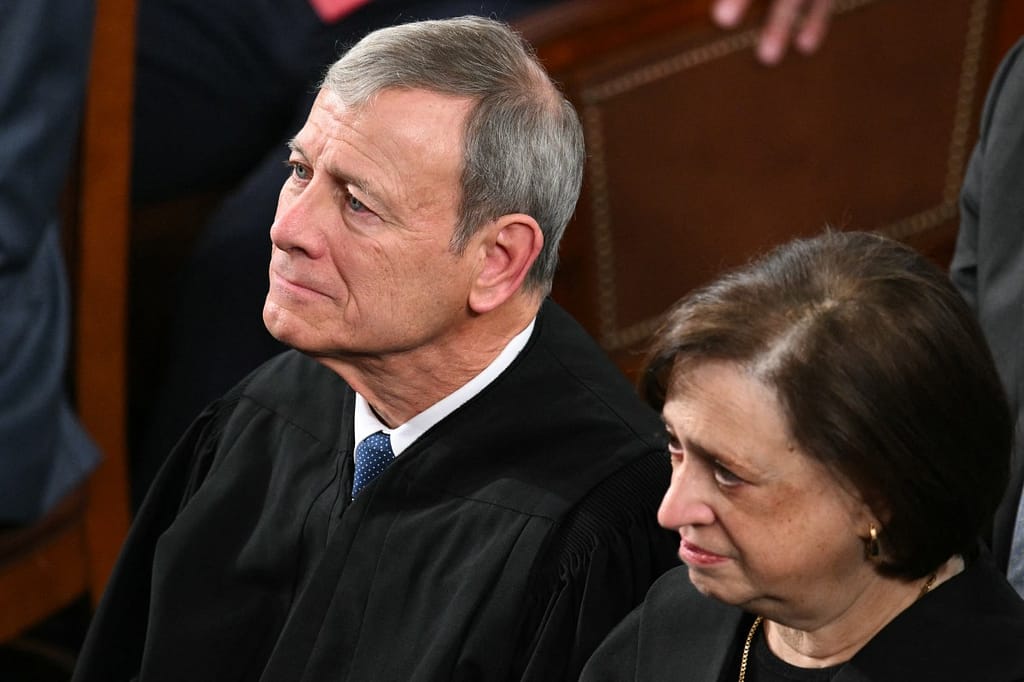
Supreme Court Chief Justice John Roberts is facing a new impeachment resolution put forward by a House Democrat.
The long-shot effort was introduced on Thursday by Representative Steve Cohen. The Tennessee Democrat announced last week that he would forgo his reelection bid after it became clear he was unlikely to win, as the state moved swiftly to gerrymander following a seismic Supreme Court opinion in late April that gutted Section 2 of the Voting Rights Act.
Thus far, no co-sponsors have supported Cohen’s resolution. Given that Republicans narrowly control the House, the resolution is not expected to advance, but it signals the level of frustration many Democrats feel with the 6-3 conservative majority on the Supreme Court.
In a statement announcing the resolution, Cohen said that Roberts has led the court to be “understood as biased: with decisions designed to benefit Republicans at the expense of representative government, seemingly contradictory and unexplained orders, and a pattern of ethical breaches that raises questions about the role of the wealthy.”
“I have come to the unfortunate conclusion that while John Roberts remains Chief Justice, correcting this misconduct and ensuring the Justices and the Court itself comply with their legal obligations will be impossible,” the Democrat said.
In recent years, after the appointment of three justices during President Donald Trump’s first term, the court has shown a willingness to undo a series of controversial precedents tied to abortion access, voting rights, affirmative action and more. While many Republicans support these moves, most Democrats are critical and believe the court has become overtly partisan.
Roberts pushed back directly on such criticisms of the Supreme Court in remarks to a conference of lawyers and judges in Pennsylvania this month.
“I think at a very basic level, people think we’re making policy decisions, [that] we’re saying we think this is what things should be as opposed to this is what the law provides,” Roberts said. “I think they view us as truly political actors, which I don’t think is an accurate understanding of what we do. I would say that’s the main difficulty.”
Cohen’s resolution contains six articles of impeachment against Roberts, largely centered on allegations that the Supreme Court under his leadership has acted in a partisan and inconsistent manner.
The articles include:
The resolution concludes that Roberts “has acted in a manner contrary to his trust as the Chief Justice of the Supreme Court of the United States” and therefore “warrants impeachment and trial and removal from office.”
Cohen’s resolution reflects growing anger among many Democratic lawmakers after the court’s recent decisions reshaped major areas of American law and policy. The Supreme Court’s conservative majority has overturned the constitutional right to abortion established under Roe v. Wade, curtailed affirmative action in college admissions, expanded gun rights, and narrowed federal regulatory authority. Democrats have also sharply criticized rulings on voting rights, particularly after the court’s late-April decision limiting the reach of Section 2 of the Voting Rights Act, which had long been used to challenge racial discrimination in election laws and congressional maps.
The Tennessee congressman specifically tied his decision not to seek reelection to the political fallout from that ruling. Tennessee Republicans moved quickly to redraw congressional districts following the court’s opinion, fueling Democratic accusations that the decision would accelerate partisan gerrymandering and weaken minority voting protections nationwide.
Jonathan Turley, a law professor at George Washington University, previously wrote for Fox News that what critics “do not mention is that the majority of opinions by the Supreme Court are unanimous or nearly unanimous. Comparatively, few cases break along strict ideological 6-3 lines.”
The backlash against the court has become a central issue within Democratic politics as progressives and many mainstream liberals argue the judiciary has become increasingly ideological after Trump appointed three conservative justices during his first term.
The impeachment push also comes amid broader Democratic efforts to impose new ethics and accountability standards on the high court. Concerns about undisclosed gifts, luxury travel and relationships with wealthy donors have intensified scrutiny of several conservative justices over the last three years, prompting renewed calls for reforms ranging from enforceable ethics rules to term limits.
Last year, Democrats in Congress proposed legislation to create a mechanism that would allow Supreme Court justices to be investigated and potentially removed for ethical misconduct. That proposal targeted issues surrounding disclosure requirements and outside financial relationships after reports involving Justices Clarence Thomas and Samuel Alito drew national attention. Roberts, while not directly implicated in the most prominent controversies, has also faced criticism from Democrats who argue he has not done enough to restore public trust in the institution.
The chief justice has repeatedly defended the court’s integrity. In annual reports on the federal judiciary, Roberts has argued that the judiciary must remain independent from political pressure and warned against efforts that could undermine confidence in the courts. The Supreme Court also adopted a formal code of conduct for the first time in 2023, though critics said the measure lacked meaningful enforcement mechanisms.
Public confidence in the Supreme Court has also become increasingly polarized along partisan lines. Recent polling has shown Democratic voters expressing declining trust in the institution, while Republicans have generally maintained more favorable views of the court. Surveys have also indicated broad public support for some structural reforms, including term limits for justices and stricter ethics requirements.
Pew Research polling data from 2025 showed that favorability of the high court had plummeted by 22 percent since five years earlier. Less than half, 48 percent of Americans, view the court favorably while half hold an unfavorable view. However, there was a stark partisan divide—with 71 percent of Republicans having a favorable view compared to just 26 percent of Democrats.
Some Democrats have floated sweeping proposals, such as expanding the number of justices on the court or imposing 18-year term limits rather than lifetime appointments. Supporters argue that such measures would reduce the perception that any single presidential term can dramatically reshape the judiciary for decades. Republicans, meanwhile, have largely accused Democrats of attempting to delegitimize the court after a series of rulings unfavorable to liberal priorities.
At the same time, polling suggests a majority of Americans across party lines are supportive of some reforms. Survey data from the Public Religion Research Institute (PRRI ) last year showed that 75 percent of Americans back term limits for the justices—including 67 percent of Republicans, 76 percent of independents and 86 percent of Democrats.
The debate over Supreme Court reform has intensified since the court’s landmark rulings on abortion, voting rights and executive power, with Democrats increasingly framing judicial accountability as a key issue ahead of the 2026 midterm elections.
At the conference this month, Roberts said the Supreme Court is “not simply part of the political process, and there’s a reason for that, and I’m not sure people grasp that as much as is appropriate.”
Impeachment of Supreme Court justices is exceedingly rare and difficult to achieve. Under the Constitution, federal judges may be impeached by the House and convicted by a two-thirds vote in the Senate for “high crimes and misdemeanors.” Only one Supreme Court justice, Samuel Chase, in 1804, was ever impeached by the House, and he was ultimately acquitted by the Senate.
That history, combined with Republican control of the House and Senate, makes Cohen’s effort almost certain to fail legislatively. Still, the resolution underscores how the Supreme Court has become one of the nation’s most politically contentious institutions heading into the 2026 midterm election cycle, with Democrats increasingly making judicial reform and court accountability a central issue.
© 2026 Newsweek Digital LLC