
Trump cancels AI executive order over China fears – The Independent
Notifications can be managed in browser preferences.
Please refresh the page or navigate to another page on the site to be automatically logged inPlease refresh your browser to be logged in
Swipe for next article
US president calls off plan to add safety guardrails amid pressure from Elon Musk and Mark Zuckerberg
Removed from bookmarks
From reproductive rights to climate change to Big Tech, The Independent is on the ground when the story is developing. Whether it’s investigating the financials of Elon Musk’s pro-Trump PAC or producing our latest documentary, ‘The A Word’, which shines a light on the American women fighting for reproductive rights, we know how important it is to parse out the facts from the messaging.
At such a critical moment in US history, we need reporters on the ground. Your donation allows us to keep sending journalists to speak to both sides of the story.
The Independent is trusted by Americans across the entire political spectrum. And unlike many other quality news outlets, we choose not to lock Americans out of our reporting and analysis with paywalls. We believe quality journalism should be available to everyone, paid for by those who can afford it.
Donald Trump has called off the signing of an executive order that would have added safety guardrails to new artificial intelligence models, citing concerns that the US could lose its AI dominance to China.
The US president was due to sign the executive order at a ceremony on Thursday, though postponed the plans due to reported pressure from Meta CEO Mark Zuckerberg and xAI founder Elon Musk.
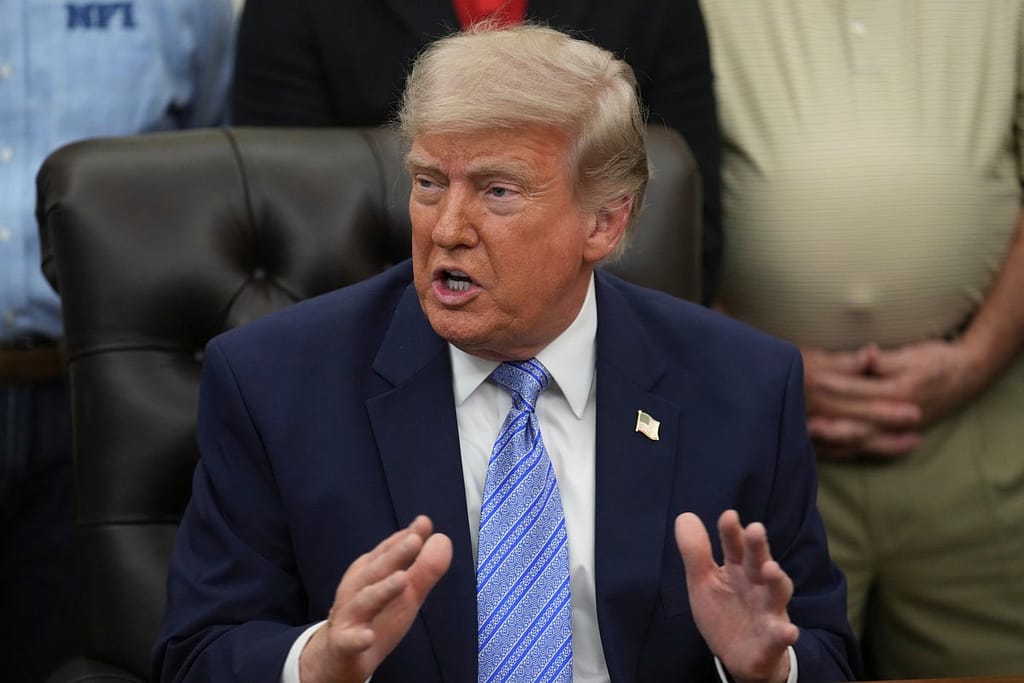
“I think it gets in the way of, you know, we’re leading China, we’re leading everybody, and I don’t want to do anything that’s going to get in the way of that lead,” Trump told reporters of the postponement in the Oval Office.
Meta and xAI did not immediately respond to requests for comment.
The order would have created a voluntary framework for AI developers to engage with the US government before the public release of advanced AI models, two sources familiar with the order told Reuters.
Trump did not specify which parts of the executive order he objected to. Tech industry advocates fear that the order’s provisions could hurt the industry’s profits if they slow the rollout of new models or prompt companies to change how those models perform in order to address security concerns.
The president also had planned to direct the US government to use the advanced models to improve the cyber security defenses of government systems, along with networks owned by sectors that are vital to the nation’s economy such as banks and hospitals, according to another source.
Concerns are growing across the US government and in the private sector about the cybersecurity risks posed by powerful new AI systems, including Anthropic’s Mythos.
Anthropic has warned that Mythos could supercharge complex cyber attacks, although cyber security experts told Reuters that fears of unfettered hacking are overstated.
Since regaining power in January 2025, Trump has taken a softer stance towards Big Tech firms than the administration of his predecessor, President Joe Biden.
Several prominent Trump supporters, however, are calling for more safety guardrails around the technology.
Recent reports suggest Trump’s chief of staff Susie Wiles and Treasury Secretary Scott Bessent are both calling for more safety measures for new AI models.
Former Trump advisor Steve Bannon has also written an open letter to Trump asking him to implement mandatory testing of frontier models, writing: “We cannot trust these companies to police themselves.”
Additional reporting from agencies.
Join thought-provoking conversations, follow other Independent readers and see their replies
Please refresh the page or navigate to another page on the site to be automatically logged inPlease refresh your browser to be logged in