The Ghost Mines of Hormuz
How Iran’s ‘Invisible’ Weapon Became Its Own Prison
THE PERSIAN GULF — It is the ultimate nightmare for a modern navy: a weapon that costs less than a used sedan, is made of wood or plastic to evade radar, and sits silently in the dark, silty depths of the world’s most vital waterway.
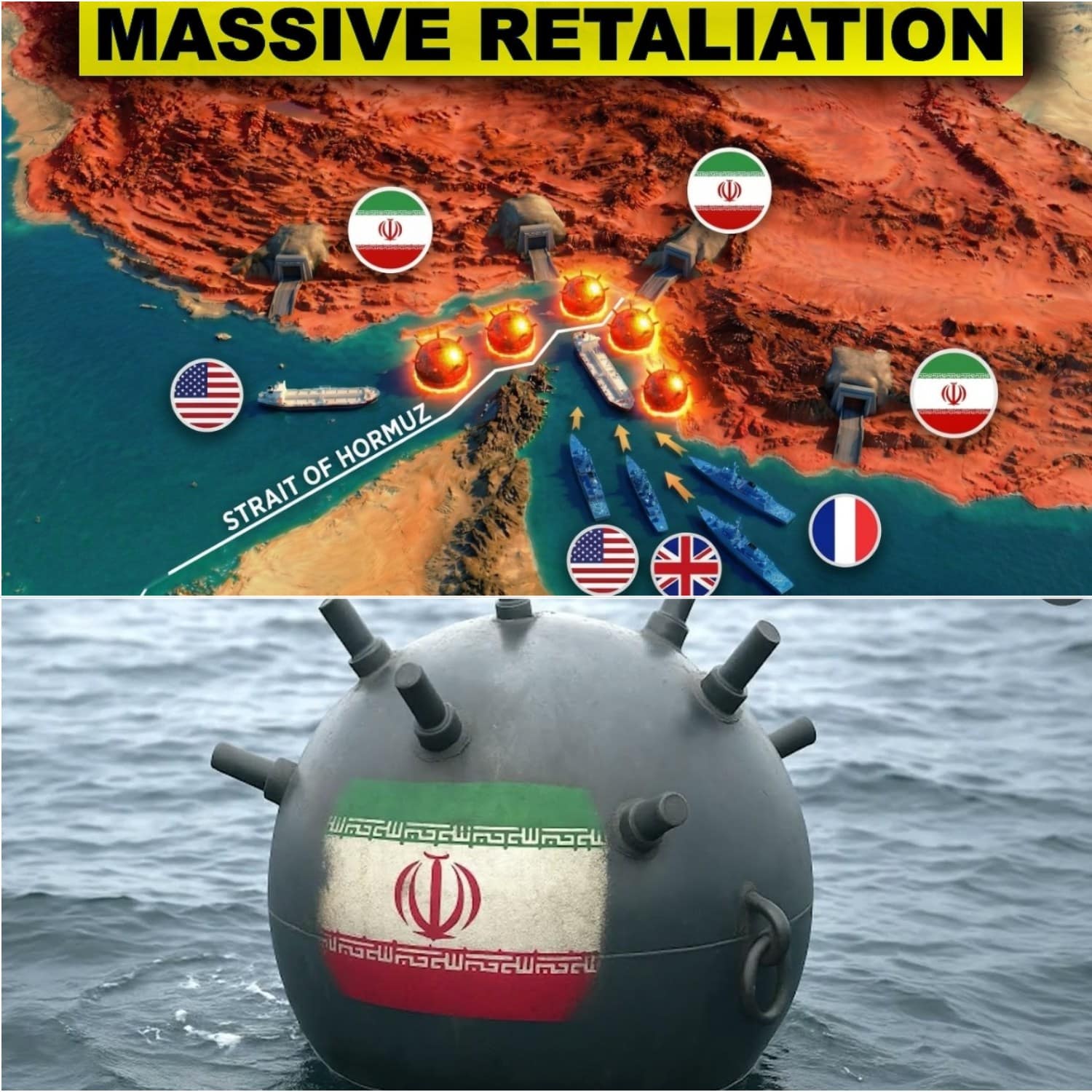
As of mid-April 2026, the Strait of Hormuz—the 33-kilometer-wide artery through which 20% of the world’s oil flows—has been transformed into a lethal “death box.” But in a twist that defines the bitter irony of modern asymmetric warfare, the country that laid the trap has found itself caught in the teeth of its own machine.
According to explosive reports from the New York Times and high-ranking U.S. officials, the Iranian Revolutionary Guard (IRGC), which spent the early days of the conflict haphazardly seeding the Strait with thousands of explosives, has made a terrifying discovery: They have lost the map.
A Symbolic Transit: The Destroyers vs. The Depths
On April 11, 2026, the silence of the Strait was broken by the churning turbines of the USS Frank E. Petersen Jr. and the USS Michael Murphy. These two guided-missile destroyers became the first American warships to transit the Strait since the outbreak of hostilities.
It was a cinematic display of “Freedom of Navigation,” conducted without a word of coordination with Tehran. Admiral Brad Cooper, commander of U.S. naval forces in the region, used the moment to announce the establishment of a “safe passage route” for commercial shipping.
The Illusion of Control
However, behind the steel-plated confidence of the U.S. Navy lies a grimmer reality. The Petersen Jr. and the Murphy are destroyers, not mine-sweepers. While their hulls can withstand the pressure of a distant blast, they are not built to clear a path. This transit was a symbolic “flag-planting” mission—a message to the world that the U.S. intends to own these waters. But beneath the waves, the real enemy remains: an estimated 5,000 to 6,000 mines, many of which are now drifting blindly with the tides.
The Cold Math of Asymmetric Warfare: $5,000 vs. $50 Million
To understand the crisis, one must understand the “asymmetric ratio.” A single Iranian contact mine can be manufactured for a few thousand dollars. Neutralizing that same mine requires specialized ships, underwater drones, and elite divers, costing the U.S. and its allies thousands of times more.
Iran’s Explosive Inventory
A recent congressional report confirmed the diversity of the threat:
Contact Mines: Simple triggers that explode on touch.
Magnetic & Acoustic Mines: Triggered by the signature of a passing hull or the sound of an engine.
Rocket-Propelled Mines: Capable of “sniping” a ship from the seafloor.
Limpet Mines: Manually attached to hulls by elite divers or “militia” fishermen.
The IRGC utilized a 55,000-strong naval militia, using 33,000 civilian boats to drop these explosives under the cover of night. Because they used small, unrecorded fishing vessels, and because the currents in the Strait are notoriously treacherous, the “safe zones” Iran promised during negotiations on April 10th have turned out to be a lie. Iran doesn’t know where its mines are—and that makes them more dangerous than ever.
Dismantling the “Death Box”: The U.S. Strategy of Source Elimination
Recognizing that clearing thousands of mines one-by-one is a fool’s errand, the Pentagon has shifted to a strategy of Source Elimination. As General Kaine, Chairman of the Joint Chiefs of Staff, put it: “We are going after their ability to attack commercial vessels at the source.“
Step 1: Neutralizing the Fleet
The first phase of the U.S. response saw the destruction of over 30 dedicated Iranian mine-laying vessels. But since any fishing boat can be a mine-layer, the U.S. moved to Step 2.
Step 2: The Port Lockdown
U.S. airstrikes have systematically leveled the docks, fuel depots, and ammunition bunkers in Bandar Abbas, Jask, and Chabahar. By destroying the “gas stations” and “warehouses” of the naval militia, the U.S. has turned thousands of small boats into useless rafts. A boat without a port to return to is a boat that cannot fight.
Step 3: Collapsing the Tunnels
Iran’s most sophisticated mine-laying method involved launching mines via shore-based rockets from reinforced tunnels. Using GBU-72 “Bunker Busters” and the GBU-57 Massive Ordnance Penetrator (MOP), the U.S. Air Force has collapsed these launch galleries, sealing the “death box” from the inside.
The “Little Crappy Ships” Dilemma: A Capability Gap
While the U.S. has been successful in stopping new mines from being laid, it faces a crisis in clearing the ones already there. For 40 years, the Navy relied on Avenger-class mine-sweepers—ships with wooden hulls that didn’t trigger magnetic mines.
The LCS Failure
In a stroke of horrific timing, the last of these wooden ships were decommissioned just months before the war, replaced by the Independence-class Littoral Combat Ships (LCS). These $360 million aluminum tri-marans have been plagued by hull cracks and gear failures, earning them the nickname “Little Crappy Ships.“
Unlike the old Avengers, the LCS cannot enter a minefield. They must sit on the outskirts and deploy drones. One analyst compared it to “replacing a bomb disposal expert who wears a suit with a guy in a parking lot playing with a remote-controlled car.” With only one LCS—the USS Canberra—currently in the Gulf, the timeline for a full clearing has stretched from weeks to months.
Global Paralyzation: The Economic Fallout
The “uncertainty” of the mines has done what the actual explosions couldn’t: it has stopped global trade cold.
Shipping Giants Retreat: Maersk, MSC, and Hapag-Lloyd have suspended all shipments through the Gulf.
The Energy Crisis: Qatar has declared force majeure on 25% of the world’s LNG trade.
National Sacrifices: Pakistan has switched to a 4-day work week to save fuel; India has closed hotels to conserve cooking oil; Thailand has banned the use of elevators for bureaucrats.
While the U.S. and Japan have released millions of barrels from their strategic reserves, the 20-million-barrel-per-day hole left by the Strait’s closure is a wound that cannot be bandaged for long.
Conclusion: The Bitter Irony of Asymmetric War
As we look toward the G7 summit in June 2026, the world remains in a state of suspended animation. The U.S. has won the battle of the skies and the surface, but the “invisible” war beneath the waves is far from over.
The bitter irony is that Iran, which used these mines to extort the world, is now the most desperate to see them gone. Without a clear Strait, Iran cannot export its own oil, even if the U.S. blockade were to lift tomorrow. They have built a prison for the world, only to realize they are the ones trapped inside the smallest cell.
In modern warfare, the weapon you lay in the dark eventually finds its way back to your own doorstep. The mines of Hormuz are no longer a bargaining chip; they are a monument to the law of unintended consequences.