
Intel’s CEO Wins Over Trump and Musk — Now Comes the Hard Part at Intel – Technology Org
When Tan stepped into the CEO chair in March of last year, the shares went sideways for seven straight months. Intel was losing the AI race, badly. Nvidia was eating the data center. Intel’s own factories had drifted so far behind that the company was outsourcing some of its most important products to TSMC — the same Taiwanese rival it once dwarfed.
Now the picture looks different on paper. Demand for Intel’s processors has returned. Apple Inc. and Tesla Inc. are reportedly circling its manufacturing arm. The Wall Street Journal said Friday that Apple and Intel had reached a preliminary agreement on producing main processors for some Apple devices, pushing the shares higher. Bloomberg News had covered the talks earlier in the week.
The biggest political coup happened in August. After a public clash with President Donald Trump, Tan walked into a White House meeting and walked out having sold the federal government a stake large enough to make it Intel’s third-largest shareholder. According to people familiar with the matter, the turnaround required Tan calling on industry friends — Michael Dell among them — to vouch for him personally.
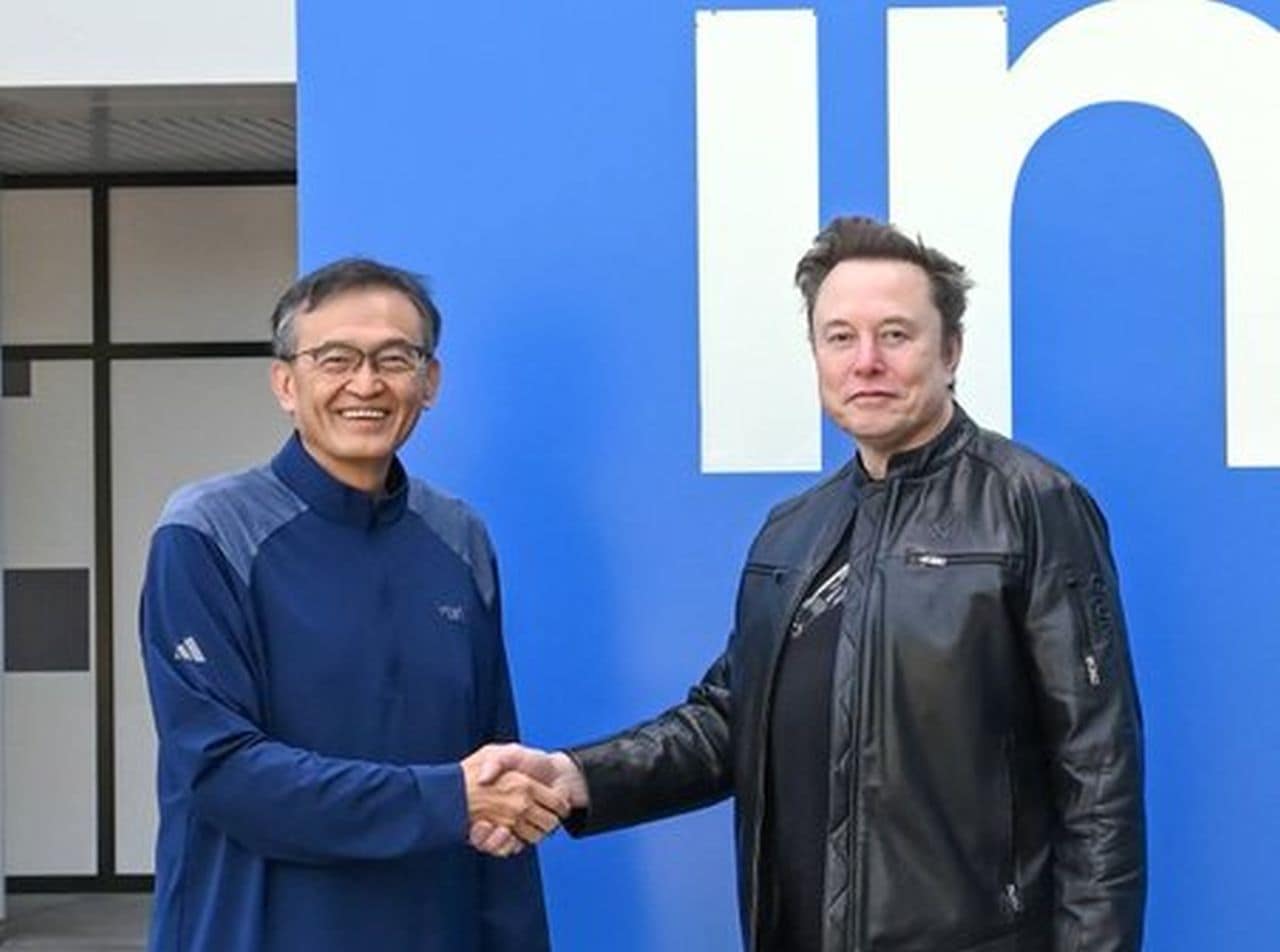
The Musk deal came together the same way. Tan and Elon Musk had been talking quietly, one-on-one, for some time. The result was a partnership to build a massive factory complex aimed at shaking up the chip industry. Most of Intel’s own executives were caught off guard, sources said. Musk posted a photo with Tan on Friday after visiting an Intel plant in Oregon.
Intel needs products that win back lost share and manufacturing so good that rivals will hand over billions in orders. Neither is guaranteed.
The math is unforgiving. New Street Research puts Intel’s cost per chip at roughly three times what TSMC pays. More than 40% of that gap is yield — the share of good chips per production run. Intel sits around 65%; TSMC clears 80%. Only 8% of the cost difference comes from higher US labor rates. The rest is operational.
“Intel has the technology, talent and scale to lead again, but leadership is earned through execution,” Tan said in his first interview as CEO.
He admits he’s spent more time outside the building than inside it, chasing customers and shoring up his leadership bench. He’s targeting end of June to finish recruiting, with two hires landed this week. “I want to have a team that I can consider one team” with a “sense of urgency,” he said.
Naga Chandrasekaran, who has run Intel’s factory business for nearly two years, says the immediate goal is winning back business from Intel’s own product teams — getting them to stop outsourcing to TSMC. But that alone won’t carry the business.
“Intel products alone, even in a wildly successful scenario, cannot fund the capital and filling the fabs and the scale that’s needed to be successful enough in a silicon business today,” Chandrasekaran said. To prove the factories work, Intel has to start hitting its own technology-introduction timetables. Period.
Tan and Chandrasekaran spend a lot of time on customer trust. “He’ll sit in front of me, and he’ll tell me what the customer is telling him,” the former Micron executive said. “Ten pages worth of notes, and there’s no escaping.” Tan has been telling prospective foundry clients they’ll get treatment at least equal to Intel’s own product divisions — and possibly better.
People who have worked with Tan describe a management style borrowed from venture capital. He doesn’t ask for detailed business plans. He has high-level industry conversations, decides he likes someone, then spends his time opening doors for them rather than auditing their work.
That style runs into trouble in semiconductor manufacturing, where the difference between a good quarter and a disaster lives in decimal places.
Kevork Kechichian, who Tan recruited to run Intel’s server chip unit, described a culture problem he hadn’t encountered at Qualcomm Inc. or Arm Holdings Plc. When a team fell behind schedule by two weeks, he asked them what the recovery plan was. “They came back with, the recovery is they adjusted the schedule to go another two weeks,” he said. Getting at least 80% of the organization to internalize urgency, he said, is now a leadership priority.
Chandrasekaran was blunter about the previous regime: Intel’s three years of losses and a 33% revenue drop from the 2021 peak were not, internally, treated as the emergency they were.
The stock had been rising on the back of last year’s cash injections when, in January, Intel missed projections. Two problems collided: not enough production allocated to meet a sudden rebound in data center chip demand, and disappointing yields on 18A, Intel’s newest manufacturing process.
“I’m disappointed that we are not able to fully meet the demand in our markets,” Tan said at the time. “My team and I are working tirelessly to drive efficiency and more output from our fabs. While yields are in line with our internal plans, they are still below what I want them to be.”
Improvements have come since. Intel still isn’t level with the industry leaders.
Even if competitors decide to trust Tan personally, the economics of switching foundries are punishing. Nobody wants to be first.
“You want another company to be the one that partners with Intel and takes the pain,” said Daiwa Capital Markets analyst Louis Miscioscia.
Some inside Intel still argue the company should be split — manufacturing on one side, product design on the other — to force both halves to move faster. Tan has shut that down for now. He says there are advantages to keeping the two units together, though he can imagine, eventually, an arrangement resembling EMC Corp.’s former majority ownership of VMware.
For three decades, Intel set the pace of the computing industry. Its developer conference in San Francisco was where the rest of the sector took its cues. An attempt to bring it back under Tan’s predecessor Pat Gelsinger was scrapped for budget reasons.
That convening role now belongs to Nvidia and its annual GTC event, where CEO Jensen Huang sets the agenda for AI computing. Curiously, GTC has actually helped Intel — not because of anything Intel did, but because Huang talked about an explosion in future demand for CPUs, which happens to be Intel’s main product. Even former rivals are now acknowledging CPUs will matter in the AI data center.
That’s good news for Intel only if Tan moves quickly enough. Gelsinger summed up the deeper problem before he left: Intel, once holder of 99% share in data center processors, was built to lead, not to compete.
“As much as I believe in Lip-Bu, I think he was dealt such a difficult hand,” said Jon Bathgate, a fund manager at NZS Capital. “I think he’s got as good a shot as anyone has of making it work.”
Tan says he has plans for where Intel will be in two, five, and ten years. He also says credibility comes from results — which is another way of saying that none of the goodwill he’s built with Trump, Musk, or Apple counts for much until the yields go up and the deadlines get hit.
Written by Alius Noreika
April 23, 2026
December 3, 2024
November 7, 2025
October 15, 2025
October 10, 2025 
September 16, 2024
October 23, 2025
October 30, 2025
April 10, 2026
January 15, 2026
Founded in 2012, this project provides science and technology news from authoritative sources on daily basis.