
U.S. and Iran make ‘progress’ in talks, aim to keep Hormuz open – The Japan Times
Subscribe
Today’s print edition
Home Delivery
Iran said there had been “major progress” in all-night discussions with the U.S. into Monday, as the warring sides try to reach a peace deal within two months.
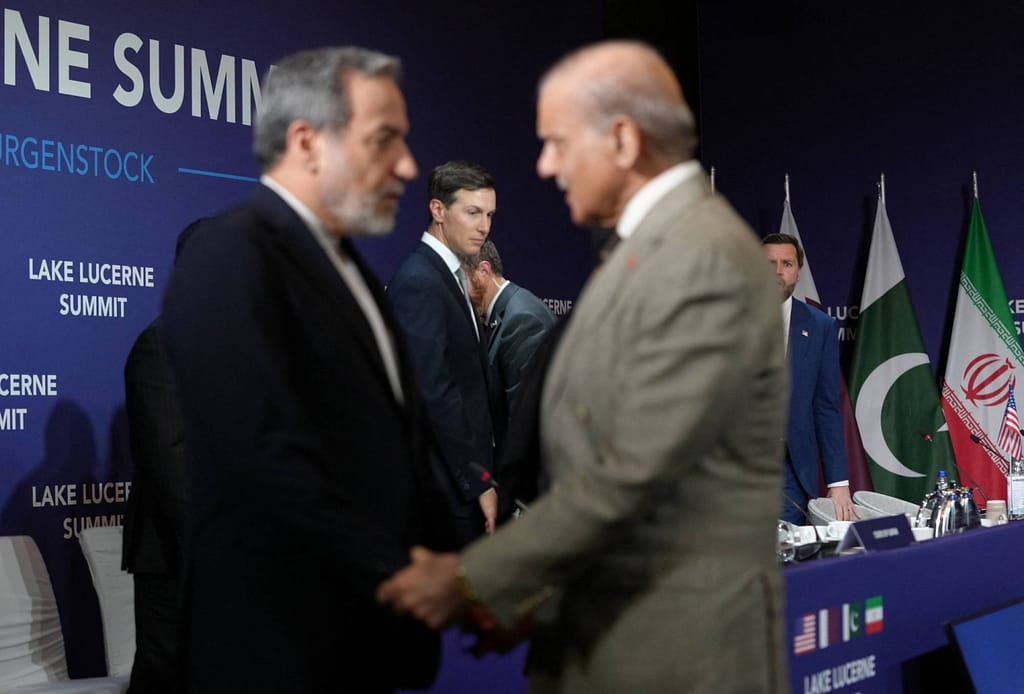
The countries began technical talks in the Swiss resort of Burgenstock over the weekend, following their interim agreement last week that led to a ceasefire extension and Iran reopening the Strait of Hormuz.
Plenty of obstacles remain, however, including Israel’s war in Lebanon against Hezbollah, an Iran-backed militant group. At one stage on Sunday, Iran said it would suspend talks — but never actually did — after U.S. President Donald Trump threatened military action against the Islamic Republic over its funding of proxy groups in the Middle East.
On Monday morning, Iranian Foreign Minister Abbas Araghchi said the mediators, Qatar and Pakistan, had managed to ease some of the tensions over Lebanon. He added Iran was beginning to see financial benefits from last week’s memorandum of understanding (MOU), including waivers of U.S. sanctions on its oil exports and assets in countries such as Qatar being unfrozen.
“Tireless Pakistani and Qatari mediation has delivered major progress to end Lebanon War,” Araghchi said on X. “Oil and petrochem exports are waived, blockade lifted, some frozen assets released, and major reconstruction & development plan launched for Iran.”
Pakistan and Qatar, in a joint statement, spoke of “encouraging progress.” They said Iran and the U.S. had agreed to establish a “high level committee” to oversee the talks, as well as working groups dealing with nuclear issues and sanctions on Tehran. There will also be a “de-confliction cell” to help ensure the cessation of military operations in Lebanon.
Iran and the U.S. have set up a communication line to “avoid incidents and miscommunication” related to maritime traffic through the Strait of Hormuz, where shipping volumes have picked up in recent days, even if they’re still far off prewar levels.
Talks are set to continue throughout this week. U.S. Vice President JD Vance arrived in Switzerland on Sunday and is leading Washington’s delegation, though he said he’d probably only be there a few days. Jared Kushner, Trump’s son-in-law, and Steve Witkoff, a special envoy, are also on the ground and heavily involved.
Iran’s team is headed by Mohammad Bagher Ghalibaf, the speaker of parliament.
“The absence of trust is truly a hugely complicating factor,” Hasan Alhasan, senior fellow for Middle East policy at the Bahrain-based International Institute for Strategic Studies, said on Bloomberg Television. “It complicates the details, especially around sequencing. Each side wants to make sure the other is keeping to their end of the commitment before they make any concessions.”
Trump also warned Iran the U.S. could start collecting tolls for Hormuz traffic…
In a time of both misinformation and too much information,
quality journalism is more crucial than ever.
By subscribing, you can help us get the story right.
With your current subscription plan you can comment on stories. However, before writing your first comment, please create a display name in the Profile section of your subscriber account page.
Your subscription plan doesn’t allow commenting. To learn more see our FAQ
Sponsored contents planned and edited by JT Media Enterprise Division.
広告出稿に関するおといあわせはこちらまで
Read more


