
World reacts to US-Iran deal to extend ceasefire, reopen Strait of Hormuz – Al Jazeera
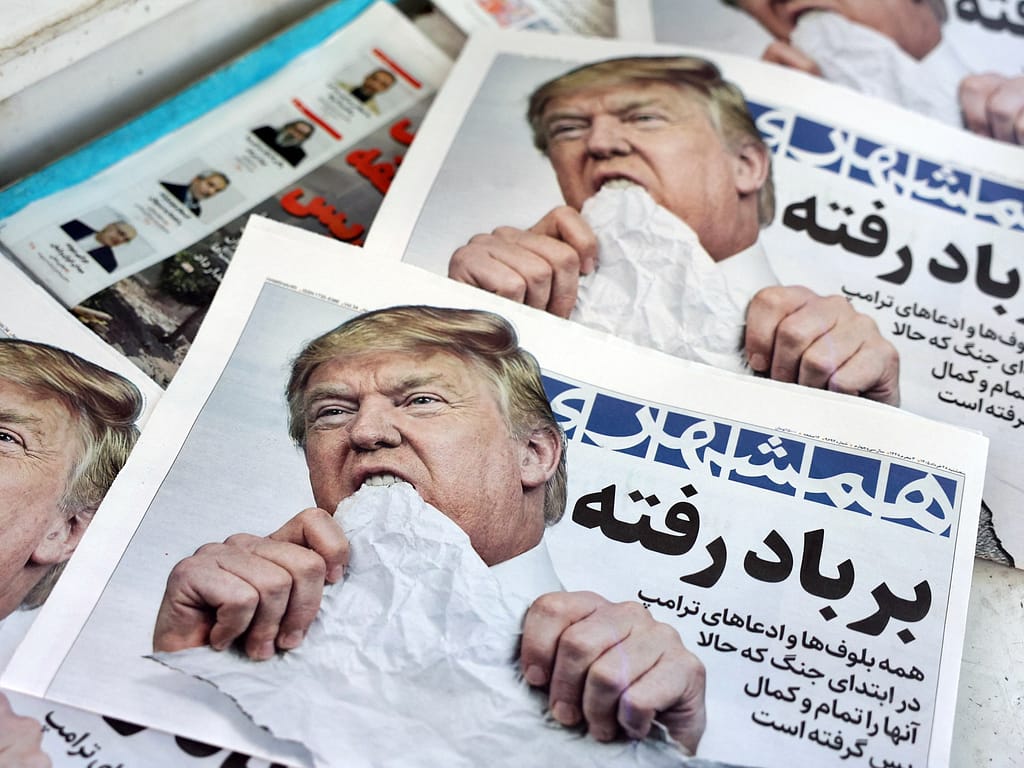
Several countries welcome deal, as IAEA chief says ‘now the technical work starts’ on Iran’s nuclear programme.
Save
Share
US President Donald Trump and Iran’s President Masoud Pezeshkian have electronically signed a memorandum of understanding to extend a ceasefire in the US-Iran war.
Pakistan, which has been mediating the peace process, said the “Islamabad MoU” had gone into effect as of Wednesday.
US officials said the agreement includes Iran reaffirming a commitment to not develop a nuclear weapon, an end to the war on all fronts and the reopening of the Strait of Hormuz.
The war began on February 28, when the US and Israel launched strikes against Iran, though a temporary ceasefire suspended much of the most intense fighting on April 8. This agreement extends the ceasefire for 60 days, paving the way for further negotiations over Iran’s nuclear programme, US sanctions on Tehran and the release of frozen assets.
Here’s how the world has reacted to the news:
The country’s Ministry of Foreign Affairs spokesperson, Esmaeil Baghaei, addressed Iranian media following the signing, stating that Iran will monitor the US’s compliance “without any leniency” and will not “fulfil” its commitments if Washington “evades its obligations”.
He also said that Iran’s nuclear programme and the lifting of US sanctions would be discussed during the 60-day period, but that Tehran’s missile programme would be off the table in negotiations.
He also said that Iran would also not ship its stockpile of highly enriched uranium abroad, that the US held responsibility to compel Israel to respect commitments to Iran, and that Iran would finalise a new regime to manage the Strait of Hormuz along with Oman, in which they would “charge fees for services” there.
In a seemingly indirect comment on the deal, Prime Minister Benjamin Netanyahu underscored the importance of maintaining Israel’s close ties with the United States, saying Washington had stood “shoulder to shoulder” with Israel during the war with Iran.
“The struggle is not yet over, and further challenges lie ahead. They require calm judgement, steadfast defence of Israel’s security interests, and at the same time the preservation of our vital relationship with our American friends, who stood shoulder to shoulder with us in this fight – a partnership we deeply appreciate,” Netanyahu said at a function, according to a statement issued by his office on Thursday.
Video footage of the moment US President Donald Trump physically signed the interim deal at the Versailles Palace showed him pausing before putting pen to paper.
“This was not easy,” Trump told his audience, holding out his hands. “I can tell you that,” he added as he signed the first page.
But the interim deal drew a backlash from Trump’s fellow Republicans, who argue the agreement wastes billions of dollars of taxpayer money and does little to restrict Tehran’s nuclear programme.
Still, some Republicans expressed support for the agreement.
US Republican Senator Roger Marshall has praised the memorandum of understanding between Iran and the US.
In a post on X, Marshall described it as a “winning deal” and said it was better than the agreement negotiated under former President Barack Obama, from which Trump unilaterally withdrew the US in 2018.
Pakistan’s Prime Minister Shehbaz Sharif said on Thursday that he was honoured to announce that the historic “Islamabad Memorandum of Understanding” had been electronically signed by the US and Iran.
In a post on X, he wrote: “The Memorandum has been signed by honourable Presidents of both the countries and also endorsed by me as the mediator. The signing of this agreement at the highest level of the respective governments demonstrates the commitment of both sides to a diplomatic resolution of the conflict.”
“May this Memorandum of Understanding serve as an enduring foundation for greater understanding, mutual respect and shared prosperity for the complete region,” he added.
The Ministry of Foreign Affairs said it considers the MoU “a renewed affirmation of the two sides’ commitment to resolving their differences” via negotiations and peaceful means and enhancing prospects for “sustainable peace and economic growth at both the regional and international levels”.
It also reiterated “full appreciation of the partnership and efforts” by Pakistan and other parties to de-escalate tensions and said the MoU represents “a solid foundation” for the next phase of talks.
In a statement to Al Jazeera, Switzerland’s foreign ministry said the signing “is an important step toward de-escalation in the region”.
The ministry added that the US and Iran, along with mediators Pakistan and Qatar, and other involved countries, would meet in Burgenstock on Friday for initial negotiations on the implementation of the agreement.
The director-general of the IAEA welcomed the interim agreement and said the UN nuclear watchdog would work out a clear plan regarding Iran’s nuclear programme.
“It is good that the memorandum is there. Now the technical work starts,” Rafael Grossi was quoted by the Reuters news agency as saying.
“It is time for the IAEA to sit down with US and Iranian officials to begin formulating concrete steps on handling Tehran’s nuclear programme.”
French President Emmanuel Macron published a video of Trump signing the MoU at the Palace of Versailles near Paris.
“President Trump signed tonight at Versailles the agreement between Iran and the United States,” he wrote on X late Wednesday.
“This agreement paves the way for lasting peace and allows the reopening of the Strait of Hormuz. It is an important step in the right direction for our compatriots that will soon enable a decrease in energy prices.”
Hezbollah chief Naim Qassem hailed the agreement as a “big victory” and said Lebanon’s negotiations with Israel should solely focus on “mutual security”, with “domestic issues” such as its disarmament kept off the table.
“We congratulate the Iranian people, leadership and those who support freedom on this big victory, and we thank the Islamic Republic for linking the Lebanon front – the resistance, which has sacrificed a lot – and forcing Israel to stop its aggression,” Qassem said in a televised address.
“The ceiling for the negotiations with the Israeli enemy is mutual security … and any proposal under the banner of disarmament will not pass, as this is an Israeli recipe for taking everything and wrecking the country,” he added.
The foreign ministry said China welcomed the signing of the interim US-Iran agreement, and hopes both countries will approach their upcoming negotiations “rationally and pragmatically”.
Speaking at a press briefing, spokesperson Lin Jian said Beijing also hopes both parties will meet their commitments under the deal.
President Vladimir Putin welcomed the US-Iran agreement brokered by Pakistan.
Moscow views the deal as a step towards permanently halting the conflict and could serve as a model for future peace agreements, said Putin.
Speaking at the Russia-ASEAN summit in the Russian city of Kazan, he said stabilisation in the Middle East would be beneficial for global energy markets.
Meanwhile, the foreign ministry said it is “imperative” that all parties “strictly adhere” to the understandings reached, including in Lebanon. Moscow is ready to contribute to diplomatic efforts to help create sustainable, long-term stability in the Middle East, it added in a statement on Telegram.
Prime Minister Sanae Takaichi said it was vital that “free and safe navigation” in the Strait of Hormuz be promptly restored through the |steady implementation of the memorandum by all parties”.
Japan hopes that both Washington and Tehran can swiftly reach a final agreement on Iran’s nuclear issue and other outstanding matters through further negotiations, she added.
Follow Al Jazeera English:


