
World reacts as Iran and US reach tentative deal to end war – Al Jazeera
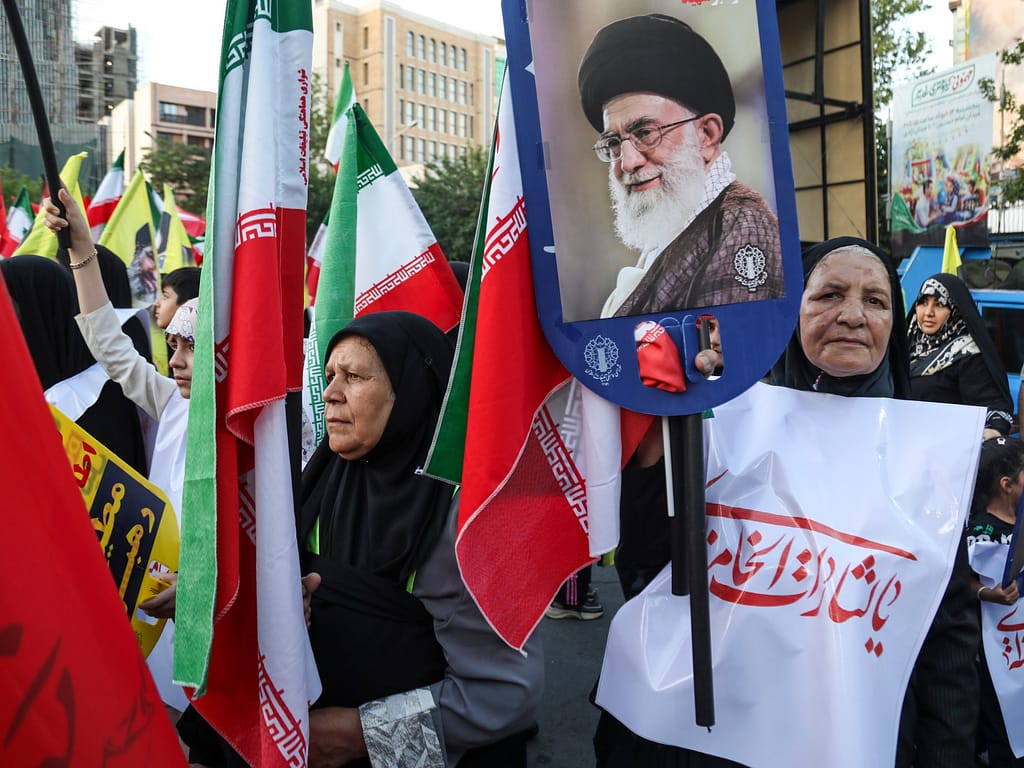
Pakistan, Qatar applaud agreement as a step towards peace and lasting tranquillity in the region.
Save
Share
World leaders have welcomed an announcement that Iran and the United States have reached a tentative deal to end the US-Israel war on Iran, including Israeli attacks on Lebanon, expressing hope for a potential path to a lasting end to the conflict.
“The deal with the Islamic Republic of Iran is now complete,” US President Donald Trump announced on Sunday on his Truth Social platform. “Ships of the world, start your engines. Let the oil flow!”
Kazem Gharibabadi, Iran’s deputy foreign minister, said a broader deal that would cover sanctions relief for Iran would be worked out during a 60-day ceasefire.
Pakistani Prime Minister Shehbaz Sharif said the accord is due to be signed on Friday in Switzerland in what is being described as a major breakthrough after months of fighting that has killed thousands of people and sent global energy prices soaring.
Here is how the world is reacting to the deal:
The Ministry of Foreign Affairs expressed its “appreciation for the determination of both the American and Iranian sides and their commitment to moving forward in resolving differences through negotiations and peaceful means”.
Minister of State Mohammad bin Abdulaziz Al-Khulaifi said he hoped the deal “will serve as a catalyst for broader efforts to advance stability and address outstanding issues through responsible and constructive engagement”.
Sharif congratulated Washington and Tehran for their “commitment to finding a diplomatic solution to the conflict” and thanked Qatar, Saudi Arabia and Turkiye for their contribution in securing the agreement.
Defence Minister Israel Katz said his country won’t withdraw from land it occupies in Lebanon.
“This is the main lesson from the events of October 7,” he said said. “Prime Minister Netanyahu made this clear to US President Trump and other senior American officials, and I also clarified it yesterday to US Defense Secretary Pete Hegseth.”
Katz warned Israel will strike Iran with “great force” if it attacks Israel over its strikes in Lebanon.
Finance Minister Bezalel Smotrich condemned the agreement with Iran, calling it “bad for Israel and for the entire free world”.
In a statement on X, Smotrich said the joint campaign against Tehran had already achieved “many achievements in weakening Iran”, insisting those gains “will not go to waste”.
“We will have to continue the campaign to topple the regime ourselves and in creative ways, and ensure that Iran will never have nuclear weapons,” he said.
In a post on X, the Ministry of Foreign Affairs welcomed the agreement “to end military operations and commence detailed negotiations over a 60-day period aimed at reaching a permanent agreement”.
The UAE stressed the need to “prioritise dialogue, diplomacy, and adherence to international law in a manner that enhances security and stability in the region”.
The Ministry of Foreign Affairs called for “full compliance with the terms of the agreement,” including “an immediate and comprehensive halt to all hostile actions”.
It praised the diplomatic efforts led by Trump and reiterated the UAE’s support for all initiatives that “enhance security and stability”.
Kuwait has expressed a “warm welcome” for the memorandum of understanding reached between the US and Iran.
It also commended the role played by Pakistan and Qatar in contributing “to bridging viewpoints and creating the conditions for reaching this important understanding”.
China commended the agreement reached while also expressing “appreciation for the mediation efforts made by Pakistan”, a foreign ministry spokesperson said.
“I view the agreement reached between the United States and Iran as an important development for establishing peace and tranquillity in our region, and I welcome it with satisfaction,” President Recep Tayyip Erdogan posted on X.
“As Türkiye, we will continue to support all efforts aimed at establishing peace, stability, and tranquillity in our region, and to contribute to lasting solutions based on diplomacy and international law.”
Secretary-General Antonio Guterres praised the deal as a “critical step” towards a “peaceful settlement of the conflict”.
European Commission President Ursula von der Leyen said the priority now was the “swift and full implementation by all parties” of the deal and that “freedom of navigation must be restored toll-free”.
“This is essential for regional stability and the global economy. It opens the door to broader negotiations on peace and security in the Middle East,” she added.
Prime Minister Keir Starmer called the deal a “hugely important” step in ending the war and said “toll-free freedom of navigation must now be restored in the Strait of Hormuz” as he offered to support mine clearance operations if needed.
“For any peace to endure, it is essential that the commitments made, particularly in relation to Iran’s nuclear programme, are robust, verifiable and fully implemented,” Starmer said in a post on X.
“It remains the UK’s firm and longstanding position that Iran must never have a nuclear weapon.”
President Emmanuel Macron called for the “urgent and unconditional reopening of the Strait of Hormuz”.
“The resumption of maritime traffic, without restriction or toll, is an indispensable condition for regional stability and the global economy,” he said on social media.
Macron also said Paris would support “the determined efforts of the Lebanese authorities” to restore the sovereignty of the state, which he said could alone ensure “Lebanon’s stability and territorial integrity and meet the needs of its populations”.
The Ministry of Foreign Affiars said Dhaka had been “consistently calling for de-escalation and resolution of the conflict” through diplomatic means.
“It hopes the agreement will be implemented in good faith and prove durable and sustainable”.
Chancellor Friedrich Merz, while welcoming the agreement, said it could pave the way towards a “reinvigorated global economy and a more secure Middle East”.
“It is crucial to implement it with determination,” he added.
Prime Minister Mark Carney continued with the chorus of countries congratulating Tehran and Washington for securing a deal.
“Canada has been clear that a durable ceasefire must both ensure safe and unimpeded transit through the Strait of Hormuz, and address the pervasive threat of Iran’s nuclear program,” he posted on X.
Chancellor Christian Stocker welcomed the agreement in a post on X.
“I call on all parties to ensure the swift and full implementation of the memorandum, including the permanent opening of the Strait of Hormuz in order to guarantee freedom of navigation in accordance with international law,” he said.
Stocker said the deal opens a window for negotiations towards “a more stable and secure” Middle East.
Follow Al Jazeera English: