Qatari negotiators fly to Tehran in a push to finalize U.S.-Iran deal – NBC News
news Alerts
There are no new alerts at this time
An effort is underway to finalize a U.S.-Iran deal, expected to reopen the Strait of Hormuz, but the push to finalize a memorandum of understanding has been rattled by fresh Israeli strikes on Lebanon’s capital.
Subscribe to read this story ad-free
Get unlimited access to ad-free articles and exclusive content.
President Donald Trump said in a post on Truth Social Sunday that the strikes on Beirut “should not have happened, particularly on a special day when we are so close to a Peace Deal with Iran.”
“We are very close to a Deal that will bring peace to the region, including to Lebanon, and all sides should stand down. There should be no more attacks by Israel anywhere in Lebanon,” he wrote, adding: “Let’s not blow it!”
Three people were killed in Sunday’s strike on Beirut’s southern Dahieh suburb, according to Lebanon’s Civil Defense Ministry. The Israeli military said it was attacking Hezbollah targets there in response to projectiles fired at northern Israel.
Trump had said on Saturday that the deal is “scheduled to get signed tomorrow,” but Iran has not yet announced a final decision on the agreement, and the fresh attacks on Lebanon have also seen Iranian officials raise doubts.
If America cannot stop Israel, “then talking about the process is no longer possible,” the head of Iran’s negotiating delegation, Mohammed Bagher Ghalibaf, posted on X Sunday.
Mohammad Jafar Assadi, the deputy commander of Iran’s top joint military command, Khatam al-Anbiya Central Headquarters, said that Israeli “crimes” will not go unanswered, according to state media.
In coordination with the United States, Qatari negotiators flew to Tehran Sunday morning to help facilitate the finalization of the agreement, a source with knowledge of the situation told NBC News.
Pakistani Prime Minister Shehbaz Sharif, a key mediator, said on X early Saturday that finalization was “likely expected in the next 24 hours,” with Pakistan “preparing for the electronic signing of the peace deal immediately after, followed by technical level talks next week.”
But Iran’s Foreign Ministry spokesman Esmail Baghaei said later on Saturday that “it will not be tomorrow,” according to Iranian state media, without giving a reason for an apparent delay.
“Due to the other side’s inconsistency,” Baghaei said, “we should remain cautious in making any statements about this process.”
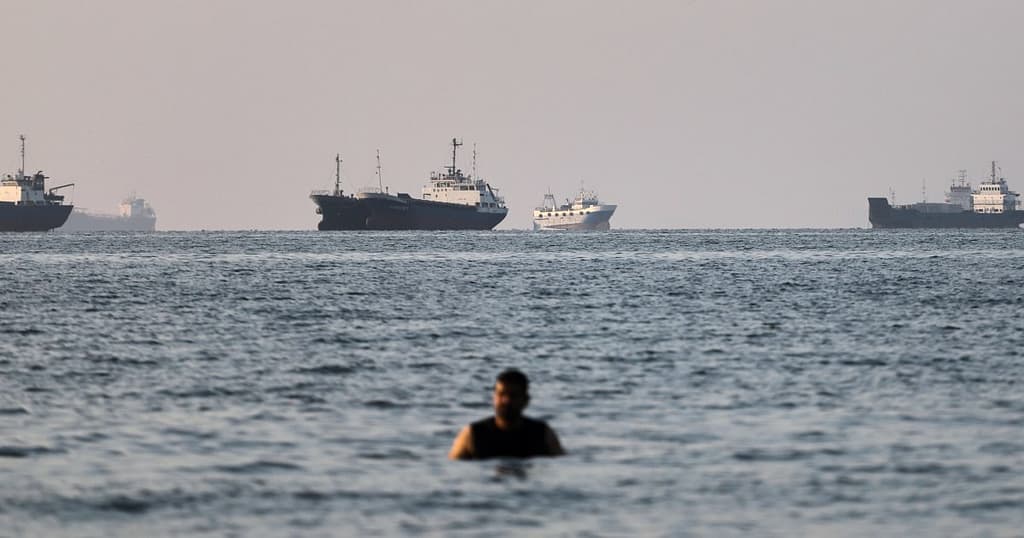
For weeks, the U.S. and Iran have appeared to be nearing a deal that would bring an end to a war that began when the U.S. and Israel launched strikes on Iran at the end of February. Iran has since imposed strict controls over the Strait of Hormuz, a vital waterway through which 20% of the world’s oil passed before the war, causing chaos in the global markets.
A ceasefire deal was reached in mid-April, but the two sides have since exchanged intermittent fire, with strikes escalating in the past week even as diplomacy inched forward.
Oil prices fell below $90 a barrel Friday morning after Trump said a peace deal was within reach. U.S. crude oil futures for July delivery were at $85 per barrel Sunday, while August futures for international benchmark Brent were around $87 per barrel.
The memorandum of understanding would reopen the Strait of Hormuz immediately without tolls and restore prewar shipping within approximately 30 days, as well as lifting the U.S. blockade of Iran’s ports, according to a regional source, a source familiar with the agreement and a diplomat with knowledge of the text.
The agreement would include a 60-day extension of the current ceasefire, which effectively collapsed this week with both sides resuming strikes. The deal requires an end to fighting in Lebanon, where Israel has continued a deadly offensive against Hezbollah despite existing ceasefire agreements.
But Israel is not a direct party to the U.S.-Iran deal, and has also insisted it will continue striking Iran-backed Hezbollah militants in Lebanon.
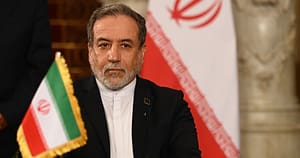
Meanwhile, on Friday Iran’s Foreign Minister Abbas Araghchi outlined terms for the deal that seemingly differ from the U.S. interpretation.
He told Iranian state media that Tehran intends to charge a service fee for ships passing through the strait, adding that while “it is not possible to levy a toll on passage through the Strait of Hormuz,” Iran would maintain control over the waterway and charge a fee for “services provided.”
He also said that Iran’s “sword will remain poised over the Strait of Hormuz indefinitely.”
Another part of the deal is for the U.S. and Iran to respect each other’s sovereignty and not meddle in each other’s affairs, Araghchi said, according to the semiofficial Fars news agency.
Details regarding two key issues — Iran’s nuclear program and the lifting of sanctions — will be finalized in the next stage of negotiations, Araghchi said.
Trump officials have cited the destruction of Iran’s nuclear program as a key objective of the conflict. Sen. Lindsey Graham, R-S.C., warned on X Friday that the terms described by Iranian media would be “awful” and that Trump’s “red line” on nuclear enrichment must hold. He welcomed reassurances from Trump, who has contested parts of the deal claimed by Iran.
Iran’s Maj. Gen. Mohsen Rezaei, the military adviser to the country’s Supreme Leader Mojtaba Khamenei, said that Trump has agreed to release $24 billion of Iran’s frozen assets “but is unwilling to announce it publicly,” according to a report by the Young Journalists Club, which is affiliated with Iranian state TV.
In a phone call with Axios, Trump told the outlet he had demanded clarification from Iran over reports that claimed the country would receive billions in frozen assets after the deal was signed, adding that officials privately “apologized for putting out false information.”
Freddie Clayton is a freelance journalist based in London.
Keir Simmons is chief international correspondent for NBC News, based in Dubai.
© 2026 NBCUniversal Media, LLC