Trump Says Iran’s Leaked Peace Deal Terms Have 'No Relation to the Truth' – Time Magazine
Personalized Content
Follow this section to personalize your feed and get instant alerts.
WHY FOLLOW?
Update your preferences in Account Settings
Personalized Content
Follow this tag to personalize your feed and get instant alerts.
WHY FOLLOW?
Update your preferences in Account Settings
Personalized Content
Follow this author to personalize your feed and get instant alerts.
WHY FOLLOW?
Update your preferences in Account Settings
Reporter
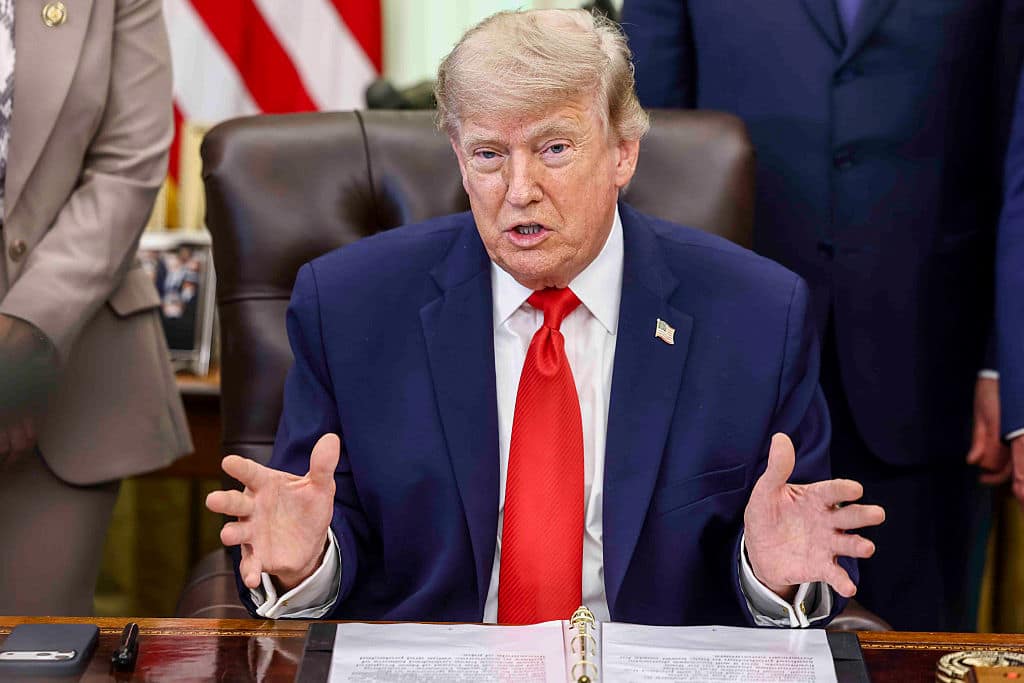
President Donald Trump speaking to reporters in the Oval Office, shortly after announcing his pull back of strikes against Iran in Washington, D.C., on June 11, 2026.
Personalized Content
Follow this author to personalize your feed and get instant alerts.
WHY FOLLOW?
Update your preferences in Account Settings
Reporter
President Donald Trump on Friday dismissed an Iranian version of a peace deal that suggested Washington had made significant concessions to Tehran.
“The terms that Iran leaked out to the fake news have nothing to do with the terms that were agreed to, in writing,” said Trump. “What they said, including their weak and pathetic statement on having a deal, bears no relation to the truth. Very dishonorable people to deal with.”
Trump accused Iran of continuing to target ships in the Strait of Hormuz and warned “they better get their act together, and fast.”
A memorandum of understanding shared by Iran’s state media indicated Tehran would not relinquish its ambitions to manage the Strait of Hormuz and would demand the release of billions of dollars of frozen Iranian assets.
By contrast, the White House has described the understanding as a five-point performance-based plan.
A Trump Administration official told TIME it had been agreed that all nuclear material would be destroyed, removed and any nuclear program dismantled. The Strait of Hormuz will be reopened and Iran will not fund any terrorist groups. Crucially, Iran’s frozen assets won’t be released until the country meets certain performance metrics.
Vice President J.D. Vance remarked upon the performance-based plan as he echoed Trump’s dismissal of Iranian state media reports.
“I'm seeing a lot of fake information about a potential deal to reopen the Strait and end Iran's nuclear weapons program. First, the Iranians are not receiving any cash, and no funds are being released for simply signing a deal or attending a meeting,” he said.
Advertisement
Vance emphasized that the deal “is structured to ensure that the U.S. and its allies' concerns are prioritized, and that if the Islamic Republic of Iran meets its obligations, then economic benefits will flow to them and to the entire region.”
He argued the deal has “the potential to remake the region and lead to lasting peace.”
Tehran has long maintained that any cease-fire agreement between the U.S. and Iran would need to assure the halt of Israeli strikes against the militant group Hezbollah in Lebanon. While words to this effect are present in the terms reported by Iran’s state media, there is no mention of it in the White House’s performance-based plan.
There also continues to be conflicting reports as to when a peace deal may be finalized and signed.
Trump, when he cancelled planned strikes against Iran Thursday afternoon, said the signing of a deal would be announced “shortly” but there has yet to be a firm follow-up from the U.S.
Advertisement
Iranian Foreign Minister Abbas Araghchi on Friday said a “memorandum of understanding has never been closer.”
“Pending its finalization, the media should refrain from entering speculation about its content,” he urged, stating that “all details will be shared with the public in due course.”
Shehbaz Sharif, the Prime Minister of Pakistan, who has served as a key intermediary during the peace talk negotiations, also said “a final, agreed upon text of the peace deal has been reached and Pakistan is now working closely with both sides to finalize.”
TIME has reached out to the White House for additional comment.
The contradictory reports from Tehran and Washington come after a period of renewed hostilities as both sides traded strikes in the region.
U.S. Central Command (CENTCOM) forces launched what it called “self-defense strikes” against Iran on Tuesday, after holding Tehran responsible for the downing of a U.S. Army helicopter over the Strait of Hormuz.
Advertisement
Iran retaliated with strikes targeting U.S. bases across Jordan and several Gulf nations, renewing concerns of instability in the region and testing the already fragile cease-fire.
Hostilities continued into the early hours of Thursday morning and looked set to escalate further when Trump threatened to hit Iran “very hard” and assume control of its oil infrastructure by taking Kharg Island, a key oil hub.
Amid widespread calls for de-escalation and a return to diplomatic negotiations, Trump reversed course hours later, citing progress of a peace deal agreement.
© 2026 TIME USA, LLC. All Rights Reserved. Use of this site constitutes acceptance of our Terms of Service, Privacy Policy (Your Privacy Rights) and .
TIME may receive compensation for some links to products and services on this website. Offers may be subject to change without notice.
This site is protected by reCAPTCHA and the Google Privacy Policy and Terms of Service apply.