US attacks Iran after Apache helicopter downed in Strait of Hormuz – Al Jazeera
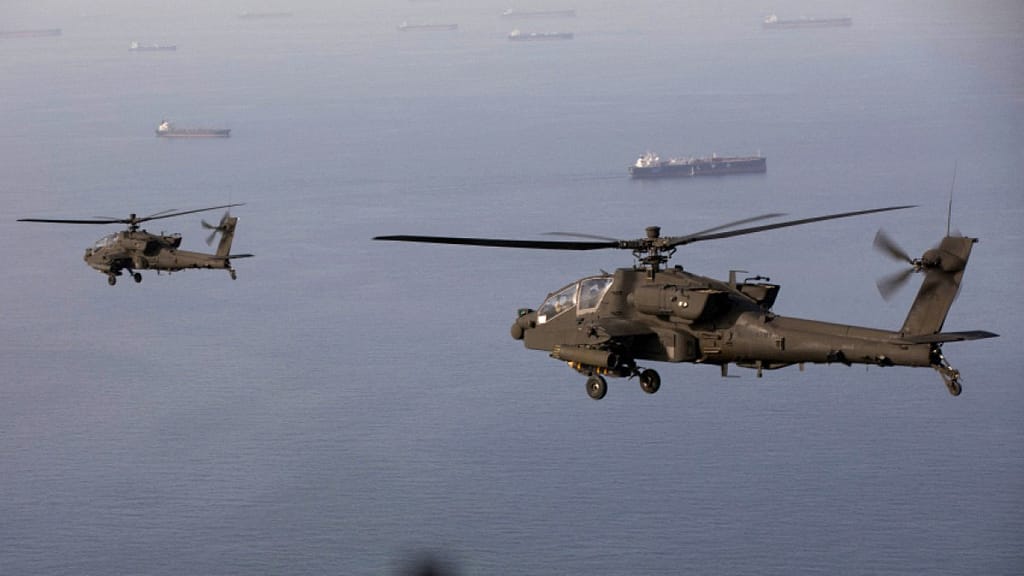
Explosions in Iran’s Qeshm Island, Sirik, Jask and Bandar Abbas after Trump blamed Tehran for downing a US helicopter.
Save
Share
US military launches ‘self-defence strikes’ targeting Iran
The United States launched waves of attacks on Iran after the downing of a US Apache helicopter in the Strait of Hormuz, prompting warnings of retaliation from Tehran.
The US military said the attacks began at 22:00 GMT on Tuesday and ended just before 01:00 GMT on Wednesday.
It described them as “self-defense strikes” and a “proportional response to unjustified Iranian aggression”.
Iran’s state broadcaster IRIB reported explosions on Qeshm Island in the Strait of Hormuz, and in the ports of Sirik and Jask during the first wave.
It reported further explosions in Jask and in Bandar Abbas hours later.
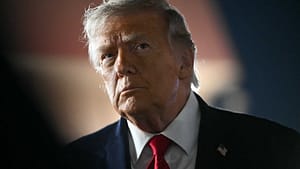
Earlier on Tuesday, US President Donald Trump blamed Iran for downing the helicopter.
In a statement on his Truth Social platform, he wrote that Iran had shot down the aircraft while it was on patrol over the strait and declared that the US “must, of necessity, respond to this attack”.
Both crew members were rescued safely, he said.
Iranian Minister of Foreign Affairs Abbas Araghchi said that foreign military forces near Iranian territory were “at constant risk” and later promised that there would be a response to the new US strikes.
Iranian forces “will leave no attack or threat unanswered”, he wrote on X. “Leave our region if you want to be safe.”
The helicopter’s downing and the US strikes have further strained a two-month ceasefire, a day after Iran and Israel exchanged fire for the first time since the fragile truce took effect.
Iranian state television said on Tuesday that the Israeli attacks killed at least two members of the country’s air defence units.
The US-Israel war on Iran has shaken the global economy, driven up energy prices and made many basics, including food, more expensive.
Progress in negotiations towards a permanent deal remains slow, however, particularly as Israel intensifies and expands its military campaign in Lebanon against the Iranian-backed Hezbollah armed group.
Al Jazeera’s Alan Fisher, reporting from Washington, DC, said the US military believes the helicopter was brought down by an Iranian Shahed drone – a one-way attack drone – just off the coast of Oman.
In what the US military described as the first operation of its kind, an unmanned drone boat was dispatched to the scene, and both pilots were recovered within two hours.
Trump told US media that both service members “are safe and uninjured”.
Al Jazeera’s Mohamed Vall, reporting from Tehran, said Iran was “adamant” about retaliation.
“The Iranians have been very clear about their intentions not to leave any, what they call aggression or attack on their soil, on their territory, unanswered,” he said.
“Iran thinks it has what it takes to defend itself.”
The US will be expecting the Iranian response, Fisher said, adding that US strikes had targeted Iranian radar and missile defence sites.
“This, of course, calls into question Trump’s repeated suggestion that all of those sites have been all but obliterated and removed,” Fisher said.
Before the helicopter’s downing, Trump had expressed renewed optimism over negotiations with Iran.
“We have a good chance” of signing a deal in “two or three days”, Trump said late on Monday. But he did not provide any details on why there was reason for optimism. In the two months since the US and Iran agreed to an initial ceasefire, Trump has repeatedly predicted that a deal is close.
“We’re very close to having a very, very good, strong, powerful deal,” the president said.
Mediators, led predominantly by Pakistan, have been trying for weeks to get a deal across the line. However, both Iran and the US have taken hardline positions.
The US wants to see Iran give up its stockpile of highly-enriched uranium, but Tehran is refusing that. It is demanding relief from sanctions, as well as the release of frozen assets, even before a final agreement is in place, which Trump has rejected.
Iranian Speaker of Parliament Mohammad Bagher Ghalibaf said on Monday that the US president’s remarks so far on a possible deal “contradicted the agreed-upon sections”, showing that the US is “neither seeking a ceasefire nor dialogue”.
Follow Al Jazeera English: