‘Fire is on hold’: Iran, Israel halt strikes, but threaten to respond to any new attacks – The Age
Updated ,first published
You have reached your maximum number of saved items.
Remove items from your saved list to add more.
Iran and Israel agreed to ease strikes against each other after a flare-up in violence threatened to derail peace negotiations and led US President Donald Trump to appeal for de-escalation.
Israeli Prime Minister Benjamin Netanyahu said in a televised statement on Monday (Israel time) that “fire is on hold” for now, but it would respond should Iran attack them again. Earlier, local TV reported that strikes in south Lebanon – where Israel is fighting Iran-backed Hezbollah militants – would continue at full force.
Iran had earlier announced an end to its military operations against Israel. But its central military command warned that if Israel continued to attack, including in southern Lebanon, “much harsher and more crushing actions than before will be on the way”, the semi-official Fars news agency reported, citing a statement.
The pledges from the two sides came after Trump spoke with Netanyahu by phone on Monday. A White House official confirmed the call without providing details of the conversation. Netanyahu said he told Trump that Israel has the right to self-defence.
The prime minister also rejected Tehran’s warning that any further Israeli hostilities against Hezbollah in Lebanon would draw a fresh Iranian attack. “This equation is intolerable,” he said.
The back-and-forth underscores how Trump, who has repeatedly said talks to end the war are in their final phase, is seeking to avoid a further escalation in violence. Trump said in an earlier social media post that final talks on a truce were “proceeding, subject to ignorance or stupidity getting in its way”.
Highlighting the tenuous nature of the pullback, Iranian President Masoud Pezeshkian said in a post that his country had neither abandoned the battlefield nor the negotiating table.
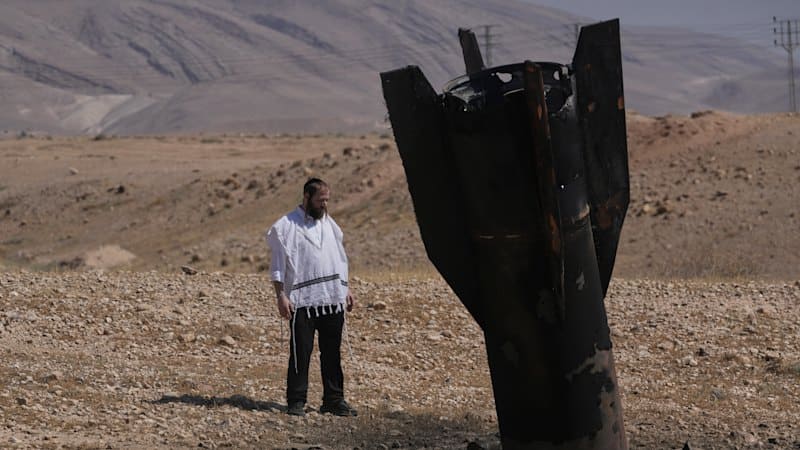
Israel and Iran traded fire has traded fire on Monday (AEST) in their first attacks since the US struck the ceasefire with Tehran two months ago. The renewed hostilities threatened to drag the Middle East back into a full-scale war even as officials continue efforts to turn an April ceasefire into a deal to permanently end the conflict.
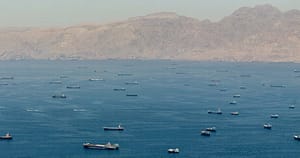
During the truce, Iran has maintained its stranglehold on the Strait of Hormuz – a crucial passage for the world’s oil and natural gas whose closure was the primary reason global fuel prices skyrocketed.
Israel has continued to strike Hezbollah, Iran’s ally in Lebanon, and pushed deeper into that country. And on Monday, Yemen’s Houthi rebels, another Iranian ally, fired at Israel and warned they would target Israel-affiliated ships in the Red Sea.
With little apparent progress in peace talks, Israel and Iran exchanging fire, and the Houthis joining the fight, the risk of the war fully erupting again appeared higher than at any point since the ceasefire.
In the wake of the new attacks, Trump wrote online: “Israel and Iran must immediately stop ‘shooting.’”
“Both sides, Israel and Iran, are looking to do an immediate CEASEFIRE! Final negotiations on ‘Peace’ are proceeding, subject to ignorance or stupidity getting in its way,” Trump said. “The Blockade will remain in place, and in full force and effect, until a ‘Final Deal’ is reached. Things should move quickly.”
Shortly after, the Iranian military’s joint command issued its statement halting strikes on Israel.
In a videotaped statement, Netanyahu said the fighting stopped after Israel “hit the terror regime in Tehran”.
The recent fighting flared up on Sunday after Tehran had warned of retaliation after Israel said it targeted Hezbollah in Beirut’s southern suburbs – in defiance of Washington’s request days earlier to stand down.
Monday marked the 100th day of the Iran war, launched on February 28 when Israel and the US killed Supreme Leader Ayatollah Ali Khamenei and other senior Iranian leaders.
The war raged until reaching a nominal ceasefire on April 8, but a permanent end to the hostilities has been challenged by Iran’s chokehold on the Strait of Hormuz, through which a fifth of all traded oil and natural gas passed in peacetime.
A senior US official on Sunday said Trump had called Netanyahu to urge him not to retaliate immediately for the Iranian missile attack. The official, who spoke on condition of anonymity to describe a private phone call, said that Trump believed he had convinced Netanyahu to wait.
Trump “got Bibi to hold off for the time being”, the official said. The official would not offer any other details of the call, and there was no immediate comment from Netanyahu’s office.
Earlier, Trump told Axios he would press Netanyahu not to retaliate.
For days, negotiations between Iran and the US over the fragile ceasefire in the war had been stalled by the fighting between Israel and the Lebanese Shiite militia Hezbollah. Israel now occupies southern Lebanon and has moved into areas of the country it hadn’t held in a quarter of a century – leading to fears about it further widening its campaign.
Bloomberg, AP, Reuters
Get a note directly from our foreign correspondents on what’s making headlines around the world. Sign up for our weekly What in the World newsletter.
You have reached your maximum number of saved items.
Remove items from your saved list to add more.
More: